
The no-fluff guide for maintenance engineers in Oil & Gas, Petrochemical, Refining, and Power industries across Saudi Arabia.
Let’s be honest about something the industry doesn’t say enough:
Most transformer failures are not sudden. They are slow. They start with a drip.
A small oil stain on the ground. A slight discoloration on a bushing. A faint smell of overheated insulation. These are the warning signs that get ignored — until they aren’t.
Transformer oil leaks are one of the most common — and most overlooked — maintenance issues in heavy industry. In refineries, gas plants, petrochemical facilities, and power substations across KSA, we see the same pattern: transformers are run until something fails. No routine checks. No gasket replacements. No oil sampling. Just run it and hope for the best.
That is not maintenance. That is gambling with your uptime and your safety.
In this guide, Petrozone International breaks down every major transformer oil leak type — what it is, why it happens, the warning signs, and what you must do to prevent it. We also cover normal industry inspection frequency and how our teams are doing it right across Saudi Arabia.
Transformer oil (insulating oil) does two critical jobs: it insulates high-voltage components and it cools the transformer core and windings. When oil leaks, both functions are compromised. Oil level drops → hot spots develop → insulation degrades → transformer fails. It is that simple.
For facilities in KSA’s petrochemical, refining, and utilities sectors, an unplanned transformer failure can mean production shutdowns worth millions of riyals per hour.
Modern power and distribution transformers have multiple potential leak paths. Each has its own failure mechanism, risk level, and fix. Here is every one of them.
The Most Common Leak — And the Most Dangerous One to Ignore
🔍 What It Is
Bushings are the insulated conductors that allow high-voltage current to pass through the transformer tank wall safely. Each bushing is sealed to the tank lid with a rubber or cork gasket. On most power transformers, you will find multiple HV (High Voltage) bushings at 33kV, 132kV, or higher — and LV (Low Voltage) bushings on the secondary side.
⚠️ Why It Leaks
Over time, the gasket material hardens, cracks, or loses its compression set. Thermal cycling (the daily expansion and contraction from load changes) gradually weakens the seal. UV exposure in the Saudi Arabian sun accelerates elastomer degradation significantly. Improper torque during installation — either over-tightened or under-tightened — also leads to premature failure.
⚡ Field Warning Sign
Oil seeping down the bushing porcelain is often the first sign. It looks like a wet stain starting at the bushing flange and running down the skirt. Do not confuse it with dust — touch it. Oil has a distinctly different feel and smell.
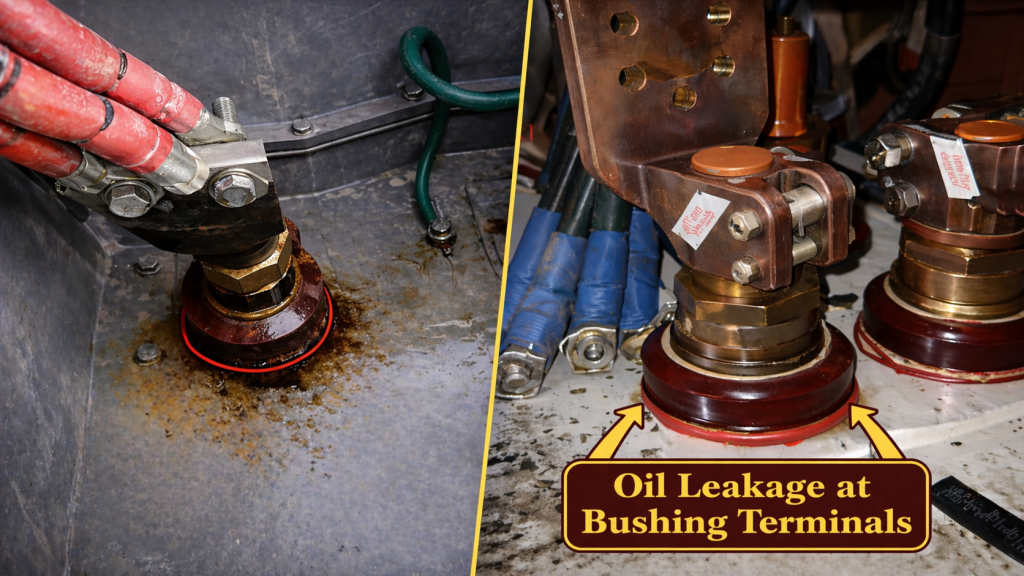
Replace all bushing gaskets during each major overhaul regardless of condition. Perform torque checks annually. Inspect bushing oil level in condenser-type bushings quarterly. Specify EPDM or Nitrile gaskets rated for KSA operating temperatures (up to 75°C ambient in some locations).
📅 Frequency: Annual inspection; gasket replacement every 6–10 years or at first sign of seepage
Silent Leakers That Drain Your Oil Level Quietly
🔍 What It Is
Power transformers use banks of radiators (cooling fins/panels) to dissipate heat. Each radiator connects to the main tank via flanged joints sealed with flat gaskets. A typical large power transformer can have 6 to 20+ radiator connections — each one a potential leak point.
⚠️ Why It Leaks
Radiator flange gaskets are under constant mechanical stress from vibration, thermal movement, and the weight of the radiators themselves. Corrosion around the flange face can compromise the seating surface. In Saudi Arabia’s humid coastal regions (Eastern Province, Jubail, Yanbu), salt-laden air accelerates flange corrosion dramatically.
⚡ Field Warning Sign
You may notice a slow oil seepage forming an oily ring around the radiator flange. In severe cases, oil drips from the bottom of the radiator bank. Check the ground beneath your transformer — consistent oil spots in a line along the radiator bank are a reliable indicator.
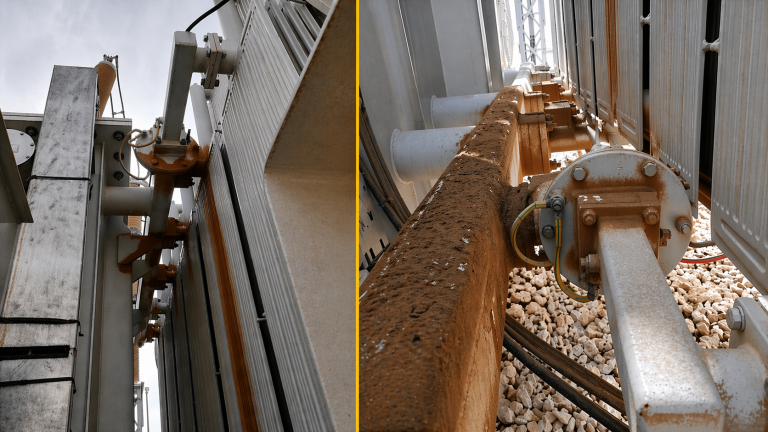
Inspect all radiator flange joints during each scheduled outage. Clean and inspect seating faces before reinstalling gaskets. Use full-face gaskets, not ring gaskets, for better sealing performance. Apply a light coat of clean transformer oil on the gasket before installation.
📅 Frequency: Visual inspection quarterly; full gasket inspection and replacement every major overhaul (5–7 years).
Where Corrosion and Fatigue Meet
🔍 What It Is
Beyond the flange gaskets, the radiators themselves — particularly older pressed-steel or corrugated-fin types — can develop pinhole leaks at welded seams and internal joint failures. The joint between the radiator panel and the header pipe is a known weak point.
⚠️ Why It Leaks
Weld fatigue from years of vibration (particularly if there is a cooling fan on the radiator bank) causes micro-cracks at the weld toe. Corrosion from external moisture or paint failure creates pitting that eventually penetrates the steel wall. In transformers that have been in service for 15+ years, this becomes increasingly common.
⚡ Field Warning Sign
Look for dry oil crust (darkened, baked-on residue) along radiator seams. This indicates a past or active slow leak that has oxidized. Do not dismiss old staining — probe it with a clean cloth to check for fresh oil underneath.
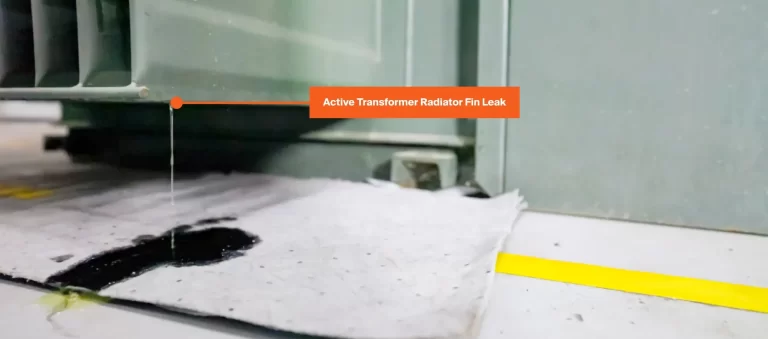
🔧 Preventive Action
Include radiator integrity in your IR (infrared) thermography scan during annual maintenance. Conduct oil pressure tests during major overhauls. Any pinhole leak found must be addressed immediately — a temporary epoxy patch is not a permanent fix.
📅 Frequency: Annual thermography; radiator pressure testing every major overhaul.
The Forgotten Leak Points That Technicians Walk Past Every Day
🔍 What It Is
Power transformers have several valves on the main tank: sampling valves for oil collection, drain valves at the bottom for oil changes, filter press connection valves, and equalizing valves between the main tank and conservator. Each one has a packed gland or a gasket seal that can fail.
⚠️ Why It Leaks
Valve packing dries out and shrinks over time. Gate valves and globe valves used on older transformers are particularly prone to gland packing failures. Valves that are rarely operated can seize in position or develop internal leaks (passing valves) that allow oil to migrate past the seat.
⚡ Field Warning Sign
Oil seeping from the valve stem is the clearest sign. Also check for crystallized/dried oil residue around valve bodies — it indicates historical leakage. A ‘passing’ drain valve will allow slow drip from the outlet even when fully closed.
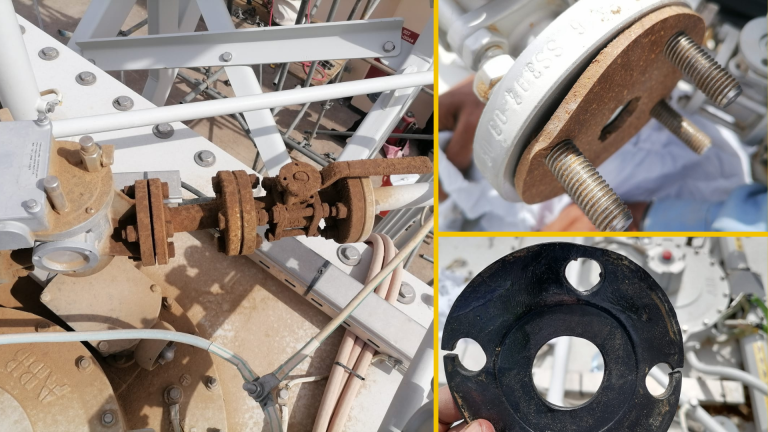
Operate all transformer valves (open/close cycle) during annual maintenance to prevent seizure. Inspect stem packing for leaks and replace as needed. Apply valve identification tags so all valves are clearly marked. Fit valve position indicators where practical.
📅 Frequency: Annual operation and inspection of all valves; stem packing replacement as required.
The Safety Device That Can Itself Become a Leak Source
🔍 What It Is
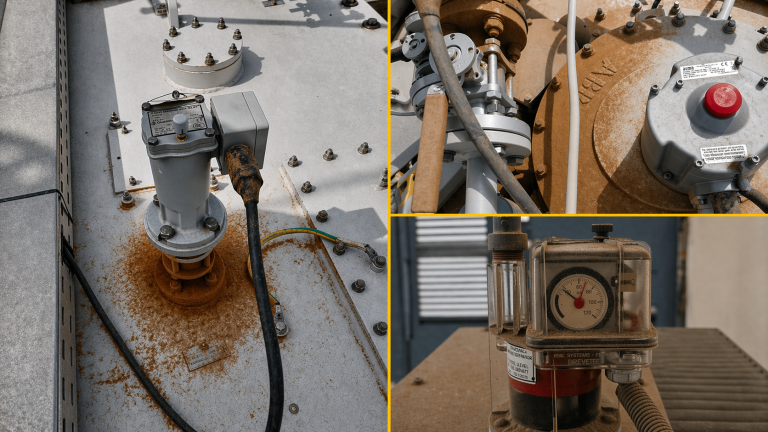
The Buchholz relay (also called gas-actuated relay) is a critical protection device fitted in the pipe between the main transformer tank and the conservator. It detects gas and oil surge generated by internal faults. The relay housing has multiple connection points — pipe flanges, test cock connections, and inspection windows — all sealed with gaskets.
⚠️ Why It Leaks
The Buchholz relay sits in a slightly elevated pipe run, making it vulnerable to gasket failure from vibration transmitted through the pipe. The glass inspection window seal (if present) is a particularly common leak point. Older relays with cork gaskets are especially prone to hardening and cracking in dry, hot conditions.
⚡ Field Warning Sign
An oil-wet Buchholz relay body — particularly around the glass sight glass or the flange connections — is a clear indicator. Also watch for any false Buchholz alarms with no corresponding transformer fault: these can be triggered by gas entering the relay through a degraded seal allowing air ingress from the atmosphere.
🔧 Preventive Action
Test Buchholz relay operation annually as part of protection system tests. Inspect all gaskets and sight glass seals. Replace sight glass rubber seal every 5 years regardless of condition. Ensure relay is correctly oriented after any maintenance (float mechanism must be upright).
📅 Frequency: Annual test and inspection; sight glass seal replacement every 5 years.
Where the Breathing System Meets the Oil — A Critical Boundary
🔍 What It Is
The conservator (oil expansion tank) is the secondary tank mounted above the main transformer body. It accommodates thermal expansion and contraction of the oil. The conservator connects to the main tank via the Buchholz relay pipe and also connects to the atmosphere through a silica gel breather. The internal rubber bag (in sealed conservator designs) or the conservator end plate gaskets are potential leak points.
⚠️ Why It Leaks
In rubber-bag conservator designs, the bag itself can perish or develop micro-tears, allowing oil to bypass the bag and enter the air space — or vice versa. End plate gaskets on conservator tanks suffer the same thermal cycling stresses as other gaskets. The sight glass on the conservator (showing oil level) has its own gasket that frequently fails.
⚡ Field Warning Sign
Check the conservator oil level gauge regularly. Any unexplained drop in oil level that is not accompanied by visible external leakage may indicate an internal bag failure. Oil appearing in the breather unit (silica gel discoloured with oil staining, not just moisture colour change) is a strong indicator of bag failure.
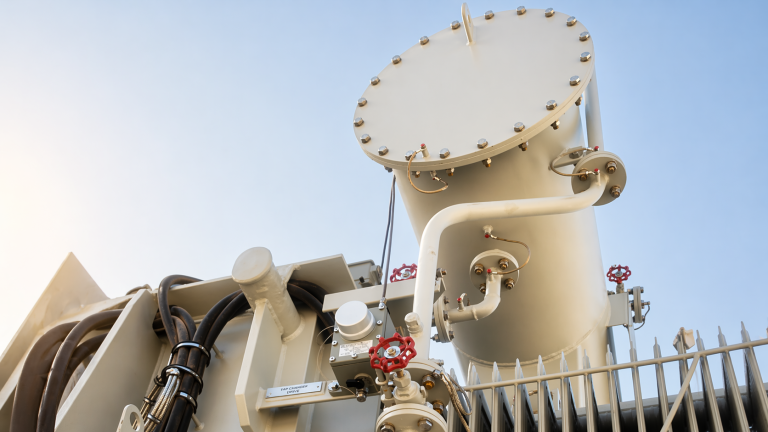
Inspect conservator bag condition every major overhaul. Perform a bag pressure test to check integrity. Replace conservator end plate gaskets at major overhaul. Check and replace conservator sight glass gasket every 3–5 years.
📅 Frequency: Annual oil level check; bag integrity test every major overhaul (5–7 years).
Small Component, Big Consequence When Neglected
🔍 What It Is
The silica gel breather allows the transformer to ‘breathe’ as oil expands and contracts, while removing moisture from incoming air. The breather connects to the conservator through a small oil seal cup at the bottom — this cup acts as a liquid seal to prevent unfiltered air from bypassing the silica gel. The seal between the breather body and the conservator pipe fitting is a potential leak point.
⚠️ Why It Leaks
The oil in the breather cup evaporates over time in Saudi Arabia’s high-temperature environment, eliminating the oil seal function entirely. The gasket on the breather body connection can also degrade and weep oil — particularly if the breather was over-tightened during installation.
⚡ Field Warning Sign
Visually inspect the breather oil cup level monthly in hot climates. An empty cup means moisture is entering unfiltered. Also inspect for oil staining on the outside of the breather body — it may indicate a gasket leak rather than normal oil sealing operation.
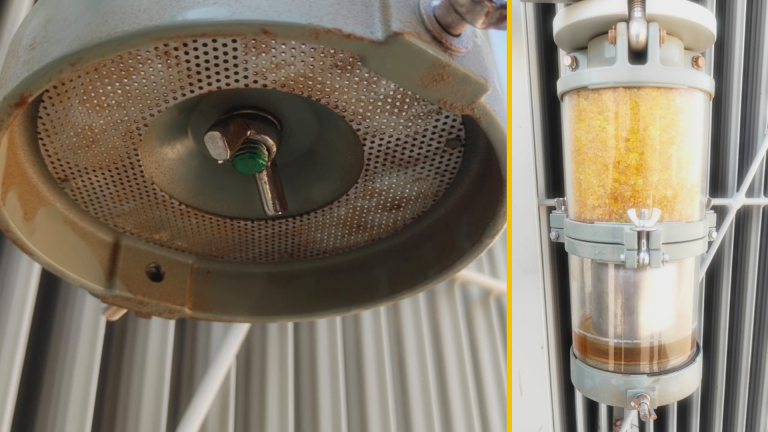
Top up the breather oil cup with clean transformer oil monthly during hot seasons (May–September in KSA). Replace silica gel when more than 50–60% has changed colour (pink/white to blue-grey). Replace breather body gasket at each major overhaul.
📅 Frequency: Monthly visual check; silica gel replacement every 6–12 months depending on environment.
Instrument Connections — Small but Often Ignored
🔍 What It Is
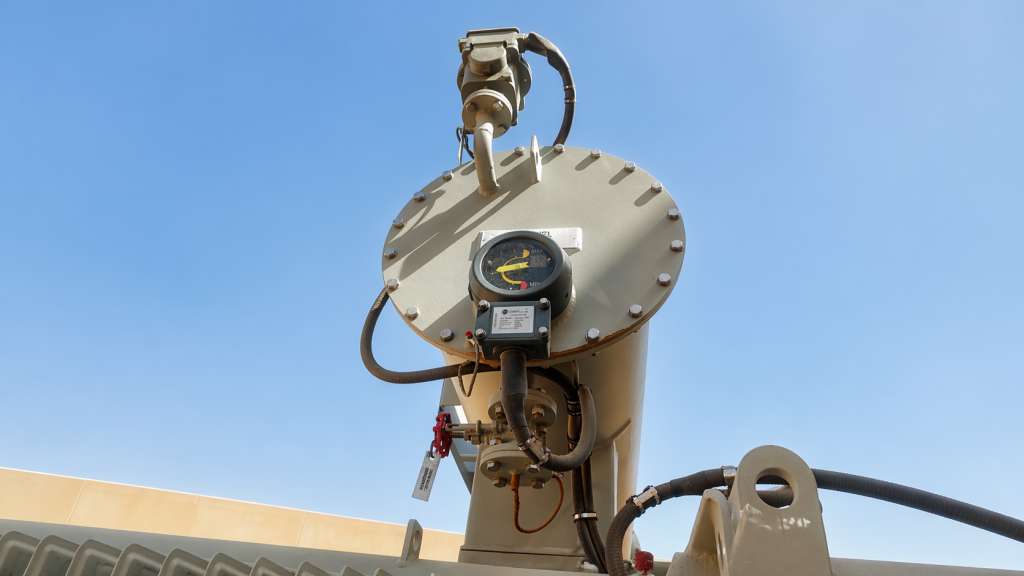
Modern power transformers have multiple temperature measurement points: winding temperature indicators (WTI), oil temperature indicators (OTI), and in some cases fibre-optic temperature sensors. Each instrument connects to the transformer through a threaded pocket or flanged connection — and each connection has a gasket or thread seal that can fail.
⚠️ Why It Leaks
Instrument connections are frequently disturbed during routine calibration or testing, which resets the gasket compression. If the connection is not properly resealed and torqued after each instrument removal, oil will seep from the thread or the instrument pocket. Corrosion on the threaded pocket itself is common in coastal and humid locations.
⚡ Field Warning Sign
A classic and overlooked leak: small oil droplets around the base of a temperature gauge or sensor pocket. This is often dismissed as ‘just a drop’ but it indicates the seal is breached and will progressively worsen under operating temperature cycles.
🔧 Preventive Action
Apply fresh PTFE thread tape or replace gaskets each time an instrument is removed and reinstalled. Torque to specification — do not over-tighten, which can crack the pocket. Inspect all instrument connections during each maintenance visit.
📅 Frequency: Inspect at every scheduled maintenance; reseal at every instrument removal.
A High-Risk Leak Point That Demands Specialist Attention
🔍 What It Is
On-load tap changers (OLTCs) are housed in a separate compartment adjacent to or integrated with the main tank. The OLTC has its own oil circuit which must be kept separate from the main tank oil, because OLTC oil becomes contaminated with carbon and breakdown products from arcing. The gaskets sealing the OLTC compartment to the main tank, and the external OLTC connections, are critical seal points.
⚠️ Why It Leaks
OLTC compartment gaskets are subject to all the standard ageing stresses, but with an additional chemical attack from the contaminated OLTC oil. Carbon deposits from tap changing can accelerate gasket degradation. A cross-contamination leak between OLTC oil and main tank oil is particularly dangerous — it contaminates the clean transformer oil and can trigger premature insulation failure.
⚡ Field Warning Sign
Any sign of oil mixing in the conservator (oil appearing in both OLTC and main tank at unexpected levels) warrants immediate investigation. Also look for oil seeping from the OLTC cover plate or from the shaft seal of the OLTC drive mechanism — the drive shaft passes through the transformer wall and has its own dynamic seal.
Service the OLTC according to the manufacturer’s maintenance schedule — typically every 50,000–100,000 operations or annually, whichever comes first. Include oil compartment gasket inspection at each OLTC service. Perform oil sampling from both OLTC and main tank oil separately and compare dissolved gas analysis (DGA) results.
📅 Frequency: Annual OLTC service; compartment gasket inspection at each OLTC overhaul.
The Biggest Gasket on the Transformer — Biggest Risk When It Fails
🔍 What It Is
The main tank cover (lid) is sealed to the tank body by a continuous flat gasket — often several meters in length on large power transformers. This gasket creates the primary oil-tight seal for the entire transformer body. Additional openings through the lid (for bushings, Buchholz pipe, thermometer pockets, and inspection covers) all have their own supplementary gaskets.
⚠️ Why It Leaks
The sheer size of the tank cover gasket means that even a small percentage of improper bolt torque can create a leak path. Thermal cycling over years of operation gradually relaxes bolt tension (gasket relaxation/creep), allowing the seal to open up at stress points. Any time the transformer tank cover has been opened for internal inspection — a common occurrence for major overhauls or active part replacement — there is significant risk of gasket re-sealing failure if not performed correctly.
⚡ Field Warning Sign
An oil wetness running along the tank cover seam, particularly at corners or at bolt locations, is the classic sign. In severe cases, you will see a continuous oil film on the tank side wall below the lid line.
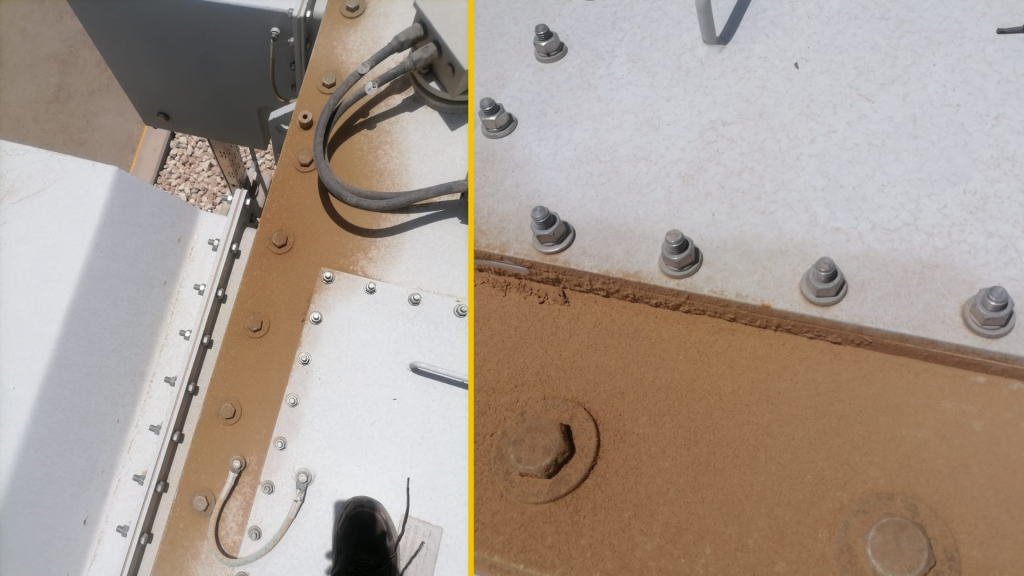
Use a calibrated torque wrench for all tank cover bolts — never estimate. Follow the correct cross-tightening sequence (similar to head gasket torquing in an engine). Replace the tank cover gasket every time the cover is opened, without exception. Specify full-face compressed fibre or PTFE gaskets rated for transformer oil service.
📅 Frequency: Re-torque check of tank cover bolts at first annual maintenance after any opening; full gasket replacement at each opening.
The Emergency Safety Device That Needs Its Own Maintenance
🔍 What It Is
Older transformers use a sealed explosion vent (a fragile diaphragm that ruptures under high internal pressure) to protect the tank from catastrophic failure. Modern transformers use a spring-loaded pressure relief device (PRD) which reseals after operating. The PRD or vent flange gasket is a potential oil leak path, especially after the device has operated.
⚠️ Why It Leaks
If the PRD has previously operated (due to an internal fault or severe overload), the seating surface and gasket may be damaged and will not reseal perfectly. Even on PRDs that have never operated, the flange gasket can degrade from heat and UV exposure in KSA’s outdoor transformer installations.
⚡ Field Warning Sign
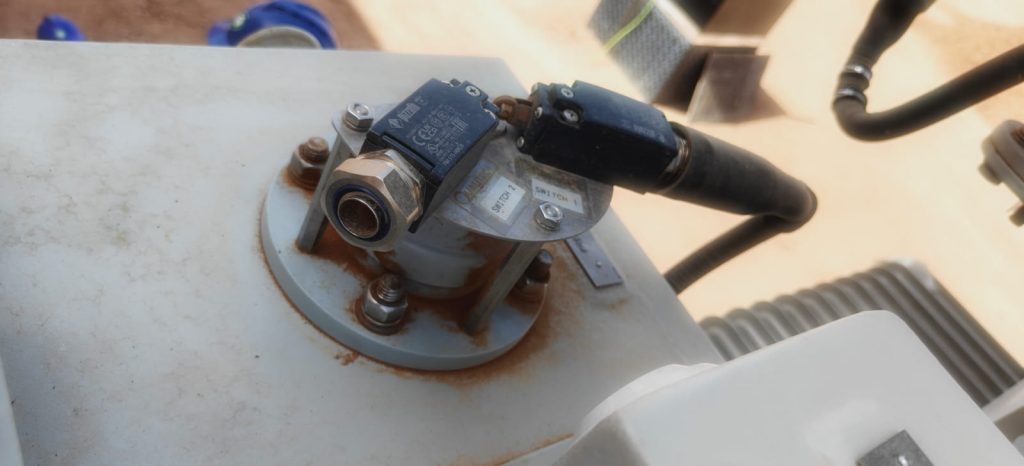
Check the PRD indicator flag (most modern PRDs have a visual indicator that pops up when operated). If the flag is up, investigate immediately — this is a safety-critical finding. Also check for oil staining around the PRD flange body, which would indicate a gasket leak under normal operating pressure.
🔧 Preventive Action
Inspect PRD indicator flag at every site visit. Replace PRD flange gasket at each major overhaul. If the PRD has ever operated, replace the entire PRD device, not just the gasket — the spring mechanism may be fatigued.
📅 Frequency: Indicator check at every site visit; gasket replacement at major overhaul.
Here is the recommended maintenance schedule that should be followed as standard practice in KSA industrial facilities. Refer to IEC 60076, IEEE C57.12, and Saudi Aramco Engineering Procedures (SAEP) for detailed requirements.
|
Maintenance Activity
|
Frequency
|
Key Check Points
|
|---|---|---|
|
Visual Inspection (Walk-Around)
|
Monthly
|
Oil level, leaks, breather condition, silica gel colour, PRD flag, unusual sounds
|
|
Infrared Thermography
|
Annual
|
Bushing terminations, radiator performance, OLTC connections, LV/HV connections
|
|
Oil Sampling & DGA (Dissolved Gas Analysis)
|
Annual (or bi-annual for critical units)
|
Moisture content, acidity, dielectric strength, dissolved gas levels
|
|
Bushing Condition Assessment
|
Annual
|
Power factor test, capacitance measurement, oil level (condenser type)
|
|
Protective Relay Testing (Buchholz, PRD, WTI, OTI)
|
Annual
|
Operational test, alarm and trip setting verification
|
|
OLTC Service
|
Annual or per operations count
|
Contact inspection, oil change, drive mechanism, compartment gaskets
|
|
Partial Discharge Measurement
|
Every 3–5 years
|
On-site PD measurement to detect insulation degradation
|
|
Major Overhaul (Full Internal Inspection)
|
Every 5–10 years
|
Full gasket replacement, active part inspection, oil treatment or replacement, insulation resistance and ratio tests
|
Here is what we see when we visit facilities across Saudi Arabia, from small distribution substations to large power complexes:
This is not unique to Saudi Arabia. It is a global industry problem. Transformers are silent. They do not shake or make noise when they are slowly degrading. They sit there, and they work — until the day they do not.
The cost of a major transformer oil leak repair or emergency replacement is always 10–20x the cost of the preventive maintenance that would have caught it.
And that does not include production losses, environmental clean-up costs, HSE incident reporting, or the reputational impact of an unplanned shutdown.
The Aramco Standard — And What It Means for Vendors
Saudi Aramco Engineering Procedures (SAEP) set strict maintenance requirements for electrical equipment at Aramco facilities. If your facility operates under Aramco standards or aspires to equivalent rigor, your transformer maintenance program needs to be formal, documented, and executed by qualified personnel.
Petrozone International is a leading electrical power systems company operating across the Kingdom— from our base in the Eastern Province to project sites in Riyadh, Jubail, NEOM, and beyond.
Our transformer maintenance services cover power transformers and distribution transformers at facilities including petrochemical plants, refineries, gas processing plants, utilities, and major industrial complexes.is a leading electrical power systems company operating across the Kingdom
|
1
|
|
|---|---|
|
1
|
Step 1 : Site Assessment & Documentation — We start with a full walk-around of the transformer, documenting every visible defect, oil stain, and condition finding before touching anything. No assumptions. No shortcuts
|
|
2
|
Step 2 : Oil Sampling — We take an oil sample for DGA (Dissolved Gas Analysis) and standard physicochemical tests before any maintenance begins. This tells us the transformer's internal story before we open it.
|
|
3
|
Step 3 : Gasket Condition Assessment — We systematically inspect every gasket-sealed joint: bushings, radiators, conservator, Buchholz relay, OLTC, valves, and thermometer connections. We use UV dye injection where leak sources are ambiguous.
|
|
4
|
Step 4 : Leak Repair & Gasket Replacement — We use OEM-grade gasket materials specified for Saudi Arabia's climate. All bolt torques are recorded. We do not use temporary sealants as permanent fixes.
|
|
5
|
Step 5 : Functional Testing — After any maintenance, we verify all protection devices (Buchholz, PRD, WTI, OTI) are correctly set and operational.
|
|
6
|
Step 6 : Report & Recommendations — You receive a full written report with photographic evidence, findings, actions taken, and forward maintenance recommendations. Not a checklist — a real engineering document.
|
We have delivered transformer maintenance services for major project references including Saudi Aramco’s Abqaiq Power Plant and the Air Products NEOM Green Hydrogen Project — two of the most demanding electrical infrastructure projects in the Kingdom.
Common questions from maintenance engineers and facility managers across KSA.
The earliest signs are: an oily wet patch or stain around bushing flanges, a faint oil smell near the transformer, unexplained drop in conservator oil level, or oil staining on the ground directly beneath the transformer. Do not wait for dripping — seepage is the warning stage.
The primary causes are: aged or hardened gaskets (from thermal cycling and UV degradation), improper bolt torque during installation or after maintenance, corrosion of sealing surfaces, and vibration-induced joint fatigue. In Saudi Arabia’s climate, elastomer degradation from heat is a leading accelerator.
Some minor leaks can be temporarily managed with approved transformer oil-compatible sealants as an emergency measure, but this is not a permanent fix. Most gasket replacements require the transformer to be de-energised and de-oiled to the appropriate level. Bushing gasket replacement on HV bushings always requires a full outage.
Annual oil sampling with full DGA (Dissolved Gas Analysis) is the minimum industry standard. For critical transformers (large power units, those supplying essential loads), bi-annual sampling is recommended. Any time a transformer has experienced a suspected internal fault or abnormal operating condition, take a sample immediately regardless of schedule.
Transformer oil is combustible (fire point approximately 160°C for mineral oil). A sustained oil leak that contacts a hot surface — a bushing, a hot pipe, or electrical arcing — can result in an oil fire. This is an HSE critical risk. Transformers installed near process equipment, in enclosed substations, or in classified areas require extra attention to leak prevention and appropriate fire suppression systems.
A standard distribution transformer (up to 2.5 MVA) gasket inspection and replacement typically takes 1–2 days with a prepared team. A large power transformer (10 MVA and above) with multiple radiator banks, OLTC, and HV bushings may require 3–7 days depending on scope and the number of gasket sets involved.
A small leak ignored becomes a large leak. A large leak leads to low oil level. Low oil level leads to overheating. Overheating causes insulation breakdown. Insulation breakdown causes a transformer failure — which can cost hundreds of thousands to millions of riyals in equipment replacement, emergency services, and production downtime. Preventive maintenance is always cheaper.
Far far away, behind the word mountains, far from the countries Vokalia and Consonantia, there live the blind texts. Separated they live in Bookmarksgrove right at the coast
Petrozone International provides comprehensive transformer maintenance and oil leak repair services across Saudi Arabia — for oil & gas, petrochemical, refining, utilities, and industrial facilities.
📧 info@petrozoneintl.com | 🌐 petrozoneintl.com | 📍 Eastern Province, Saudi Arabia
© Petrozone International. All rights reserved. For more technical articles, visit petrozoneintl.com/blog
transformer oil leak repair KSA | transformer bushing gasket | radiator flange seal | transformer maintenance Saudi Arabia | Buchholz relay gasket | power transformer leak | oil leakage from transformer | electrical equipment maintenance KSA | transformer leak sealant | transformer leak test
© 2023 Petrozone International. All Rights Reserved.
