
Repairing oil leaks on 150 MVA power transformers at a Saudi petrochemical plant
Full-scope field remediation across multiple 150 MVA high-voltage transformers: draining 50,000 litres into closed-loop tanks, crane-lifting radiator banks, renewing corroded flanges, pulling 0.1 mbar deep vacuum and holding 24-hour dry nitrogen pressure with zero drop.
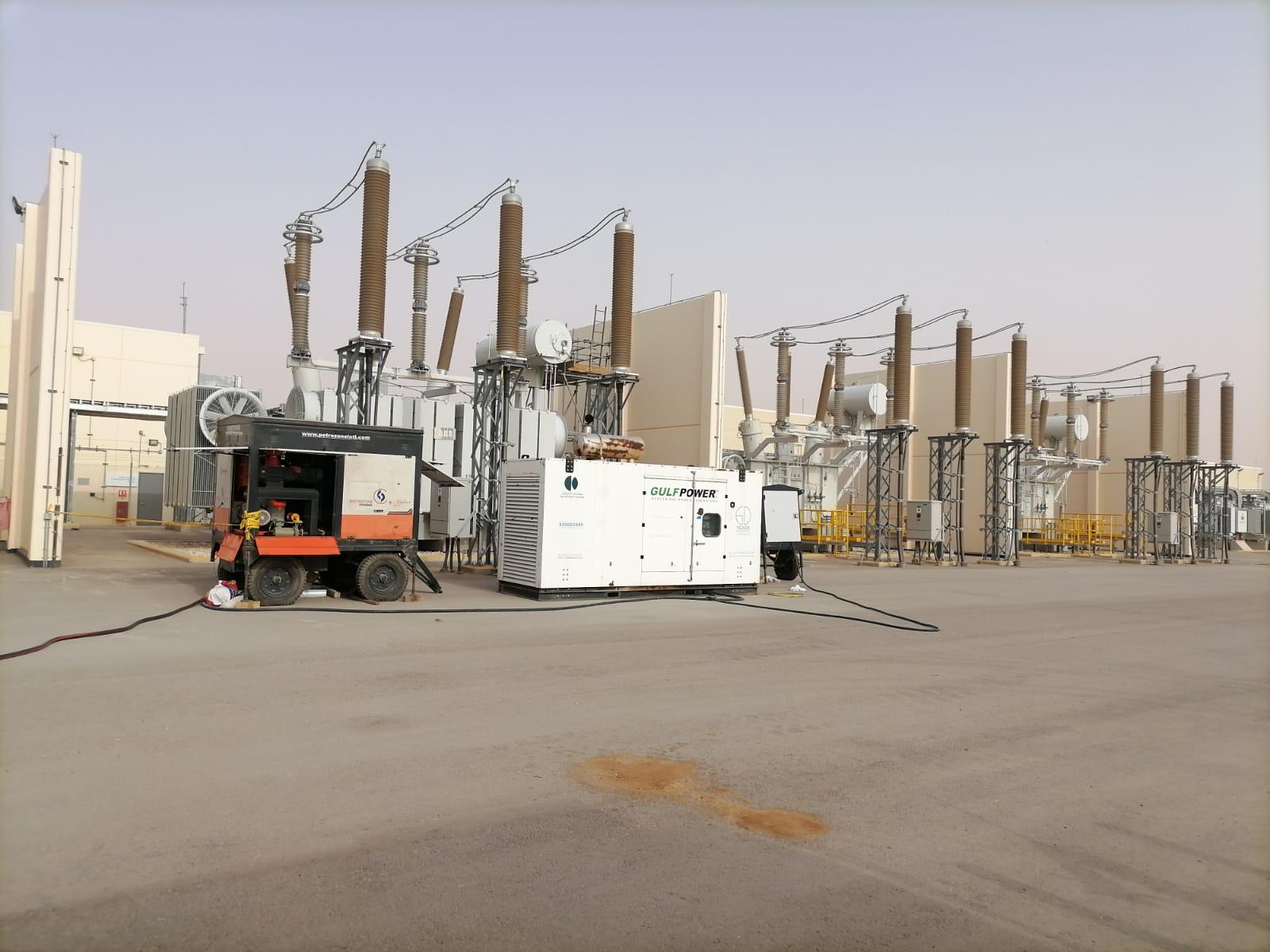
When multi-point flange seepage threatens 150 MVA petrochemical substation reliability
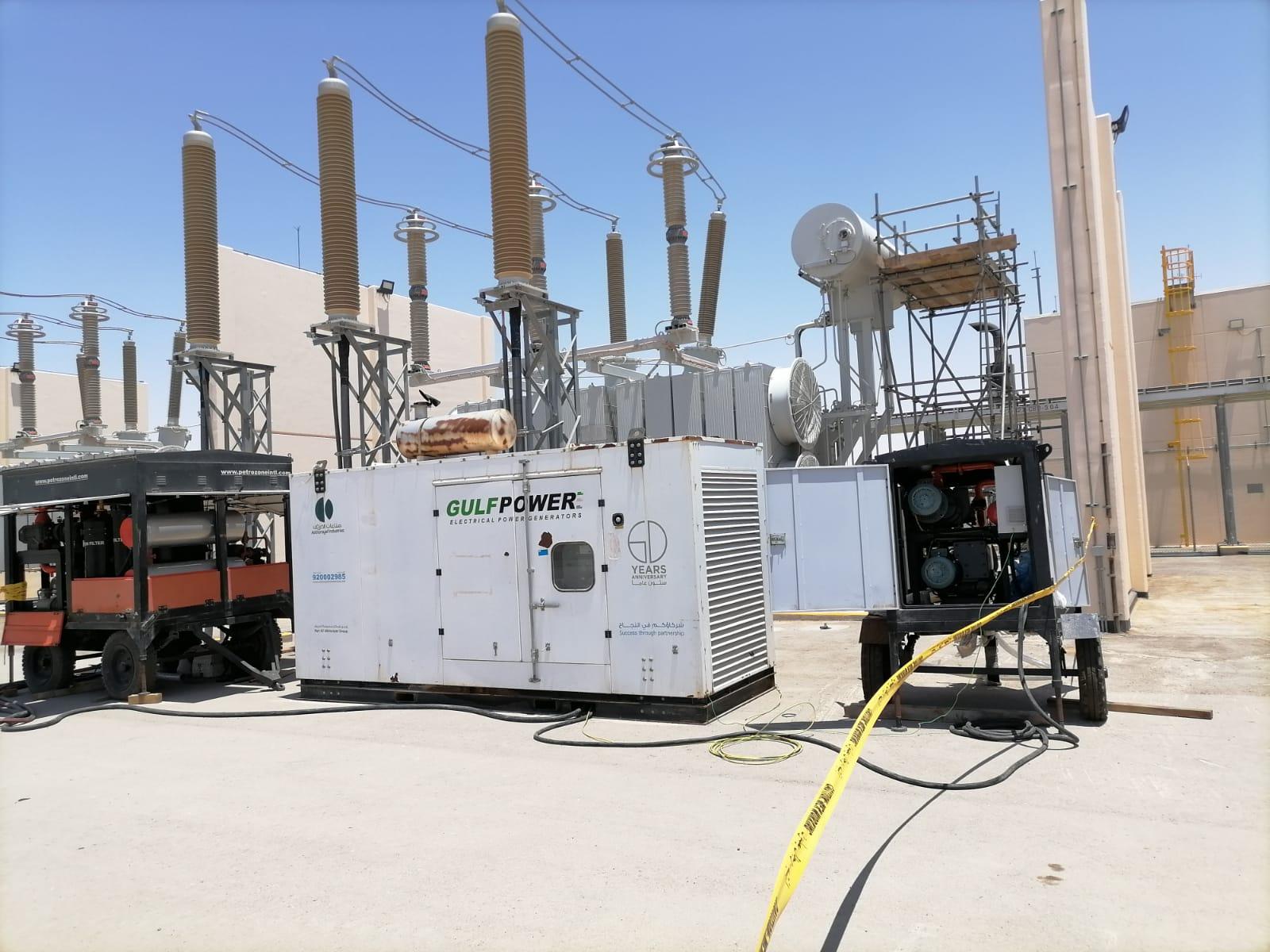
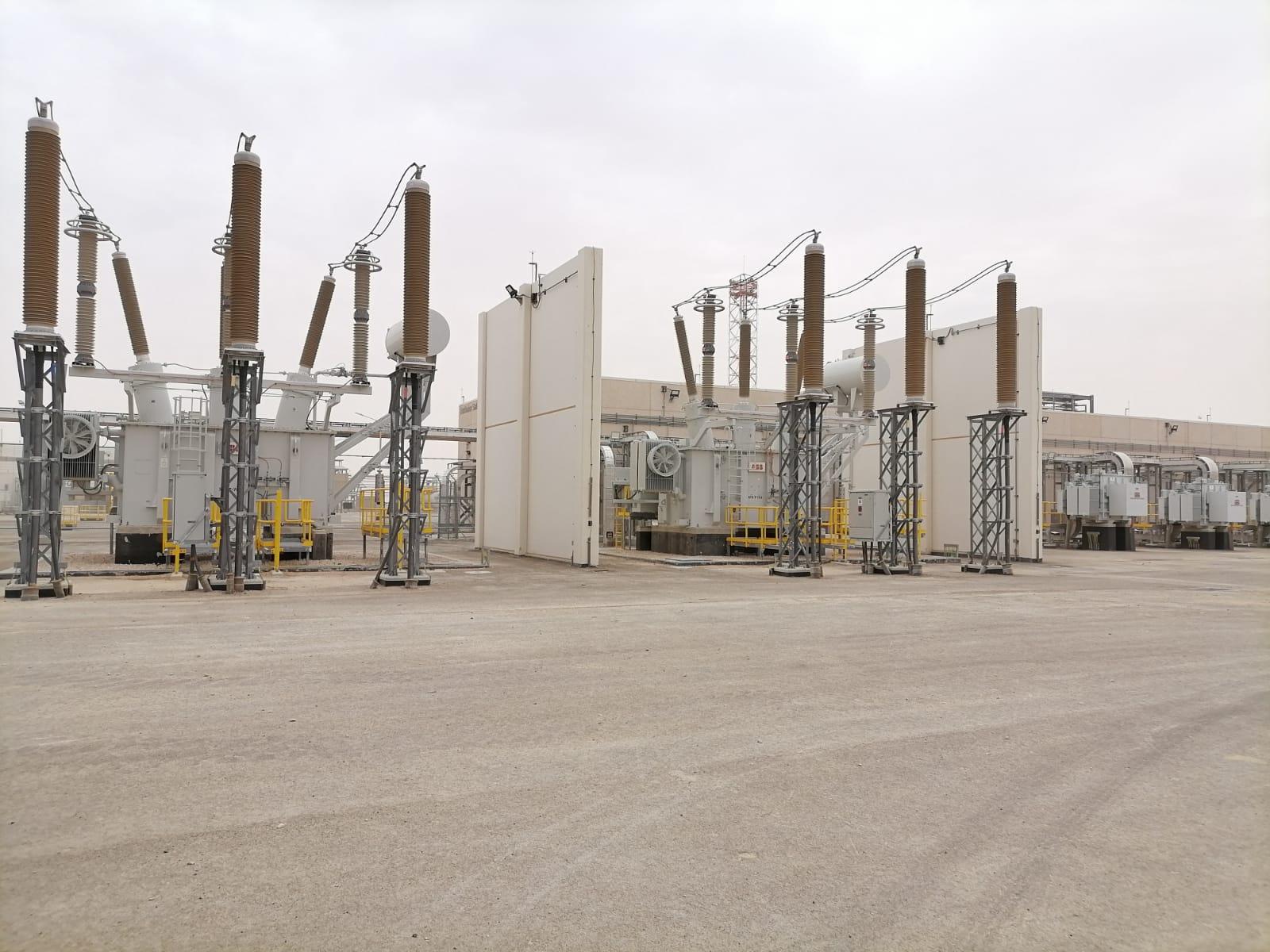
At a high-output petrochemical complex in Saudi Arabia, several 150 MVA high-voltage power transformers feeding core process trains had developed persistent, multi-point insulating oil leaks. Years of continuous 80 °C summer top-oil temperatures, coastal salt-air exposure and cooling-fan vibration had hardened original factory gaskets past their elastic limit. Oil was weeping simultaneously from upper and lower radiator isolation flanges, tank-top Pressure Relief Devices (PRDs), Buchholz gas-operated relay pipework and auxiliary drain/sampling valves.
Spot-tightening flange bolts during minor outages had stopped working; in several places, rusted flange faces were pitted underneath compression-set elastomers, so tightening bolts further risked cracking valve bodies or distorting radiator headers. Meanwhile, absorbent pads beneath the radiators required constant replacement, fire-load housekeeping audits were flagging oil-stained gravel plinths, and engineering knew that every cool humid night was pulling moist coastal air backward through degraded upper seals—the exact moisture-ingress mechanism we break down in our technical guide to transformer oil leaks.
Because each 150 MVA transformer held nearly 50,000 litres of mineral insulating oil and stood surrounded by live overhead high-voltage buswork and adjacent energized bays, half-measures were out of the question. The plant awarded Petrozone’s transformer maintenance division a turnkey field remediation contract: drain the units cleanly without exposing winding cellulose to humidity, crane-lift heavy radiator cooling banks, restore or replace corroded flanges and OEM gaskets, pull 0.1 mbar deep vacuum, purify and vacuum-transfuse all 50,000 litres back to new-oil dielectric strength, and prove zero leaks via a witnessed 24-hour dry-nitrogen pressure hold.
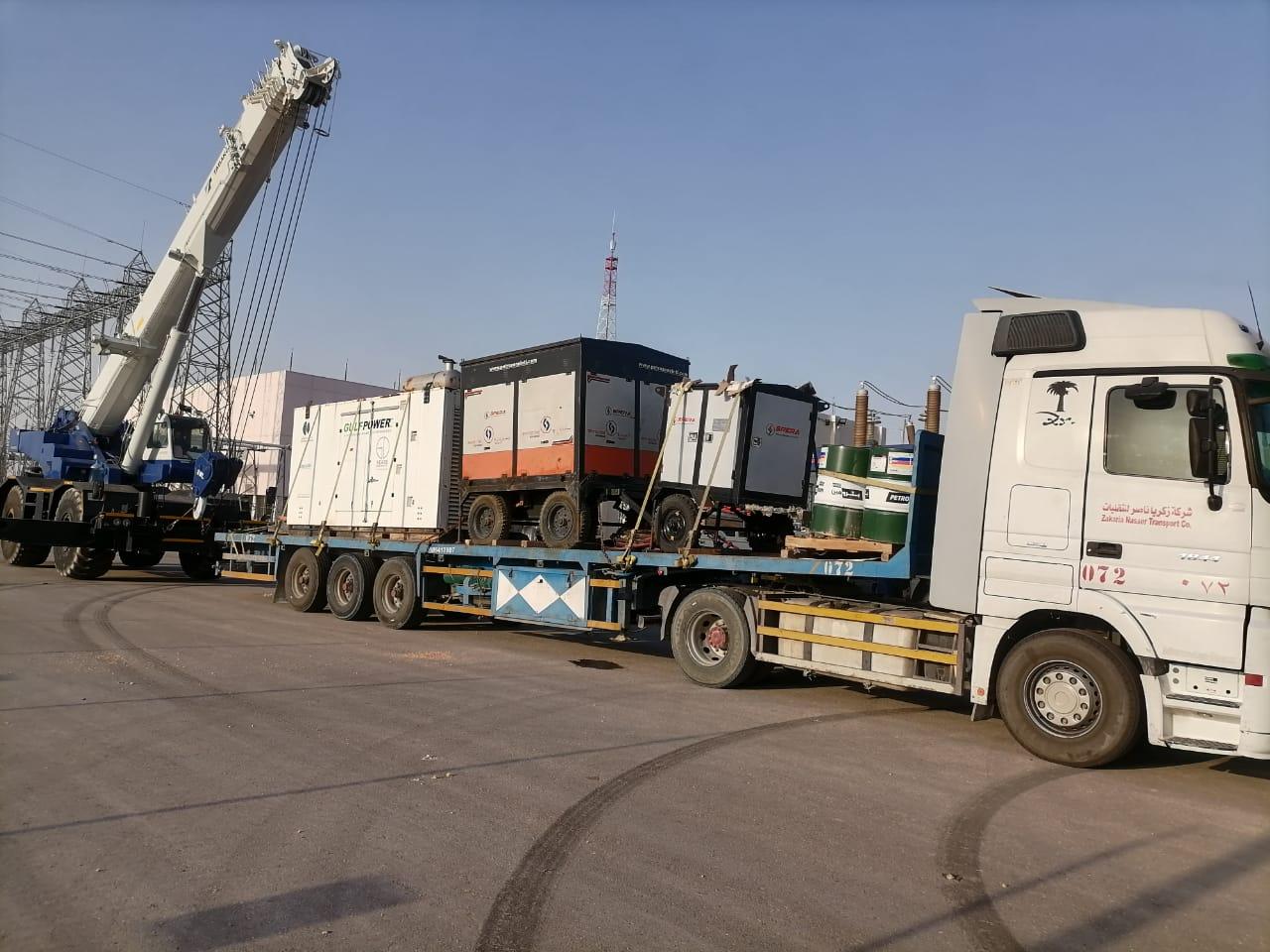
Managing 50,000 litres of dielectric oil without letting moisture touch the active core
Moving fifty thousand litres of transformer oil inside an operating petrochemical plant is a major logistics and environmental operation before a single spanner touches a radiator bolt. Coordinated closely with our industrial transport and fleet division, Petrozone mobilised certified 40,000-litre and 15,000-litre closed-loop steel storage tanks, two-stage high-vacuum oil purification trailers, dry-air/dry-nitrogen cylinder manifolds, calibrated vacuum gauges and full secondary spill-containment bunding.
Before connecting to the transformer bottom drain valve, every storage tank interior was inspected clean and dry, flushed with hot degassed transformer oil, and fitted with fresh colour-indicating silica-gel breathers. Once plant electrical operations completed high-voltage isolation, switching, earthing and multi-lock LOTO sign-off, we drew baseline oil samples for BDV and moisture, then pumped nearly 50,000 litres through closed-loop steel-braided dielectric hoses straight into sealed storage.
Here is the detail that protects the forty-year life of a 150 MVA winding while the tank stands empty: never break tank vacuum with raw humid ambient air. As the 50,000-litre oil level dropped down past the upper core yoke and pressboard barriers, our crew fed regulated ultra-dry air / dry nitrogen (dew point better than −40 °C) into the top manifold—maintaining slight positive internal pressure whenever flange openings were exposed so humid outside air could never drift inward onto dry Kraft paper insulation.
Lifting radiator banks near porcelain bushings and restoring pitted flange faces
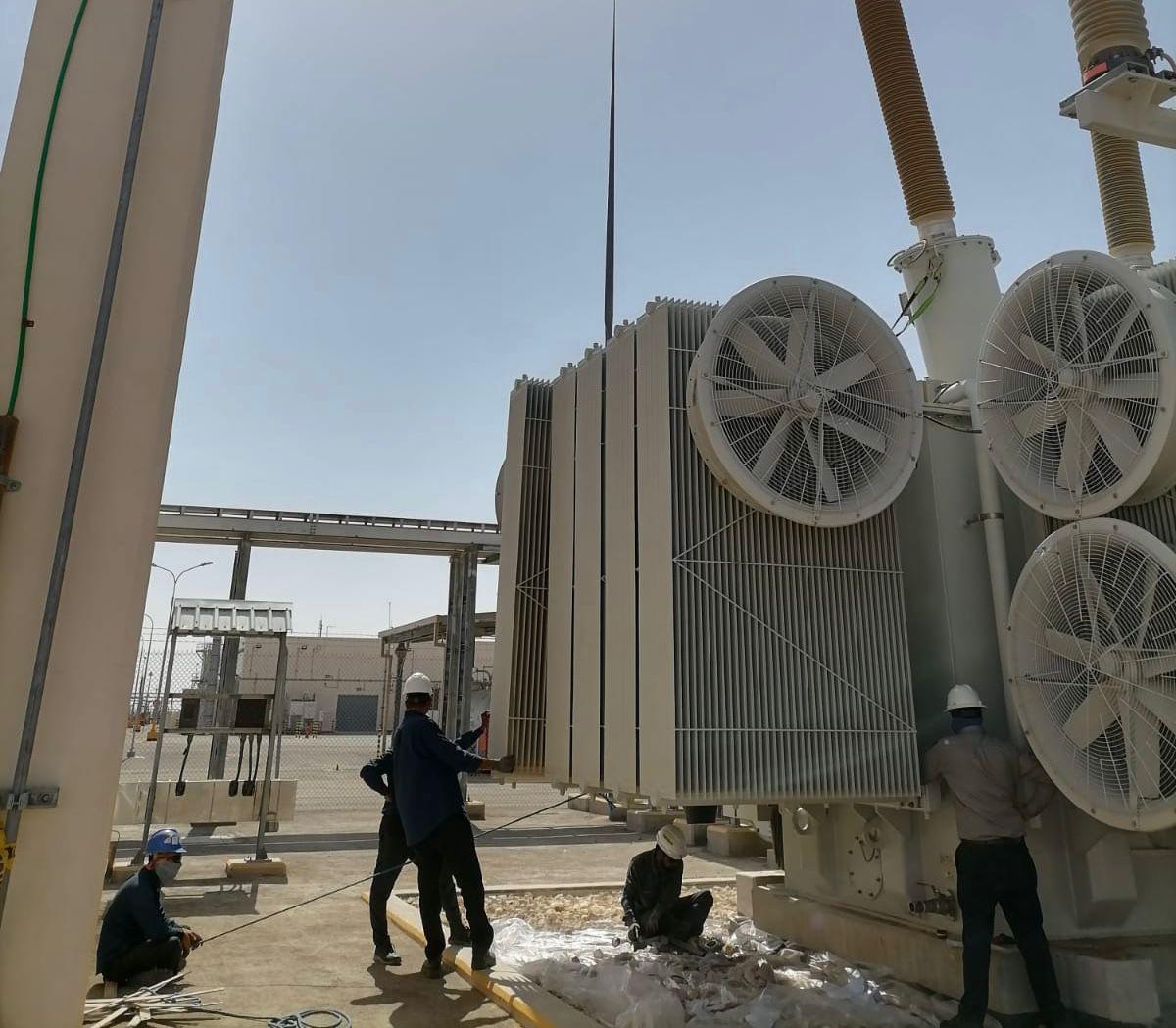
Detaching full-height radiator banks with integral cooling-fan shrouds off a 150 MVA transformer requires surgical crane work. Less than two metres away from the upper radiator header bolts sit fragile, high-value porcelain HV and MV condenser bushings where a single swinging shackle or wind-caught tagline would cause months of replacement delay. Working under an engineered lift plan supervised by our certified lifting and rigging specialists, each radiator bank was slung from certified lifting lugs on a levelled spreader arrangement, unbolted systematically while supporting full deadweight so flange studs never bound up, and lowered onto timbered cradles in the laydown zone.
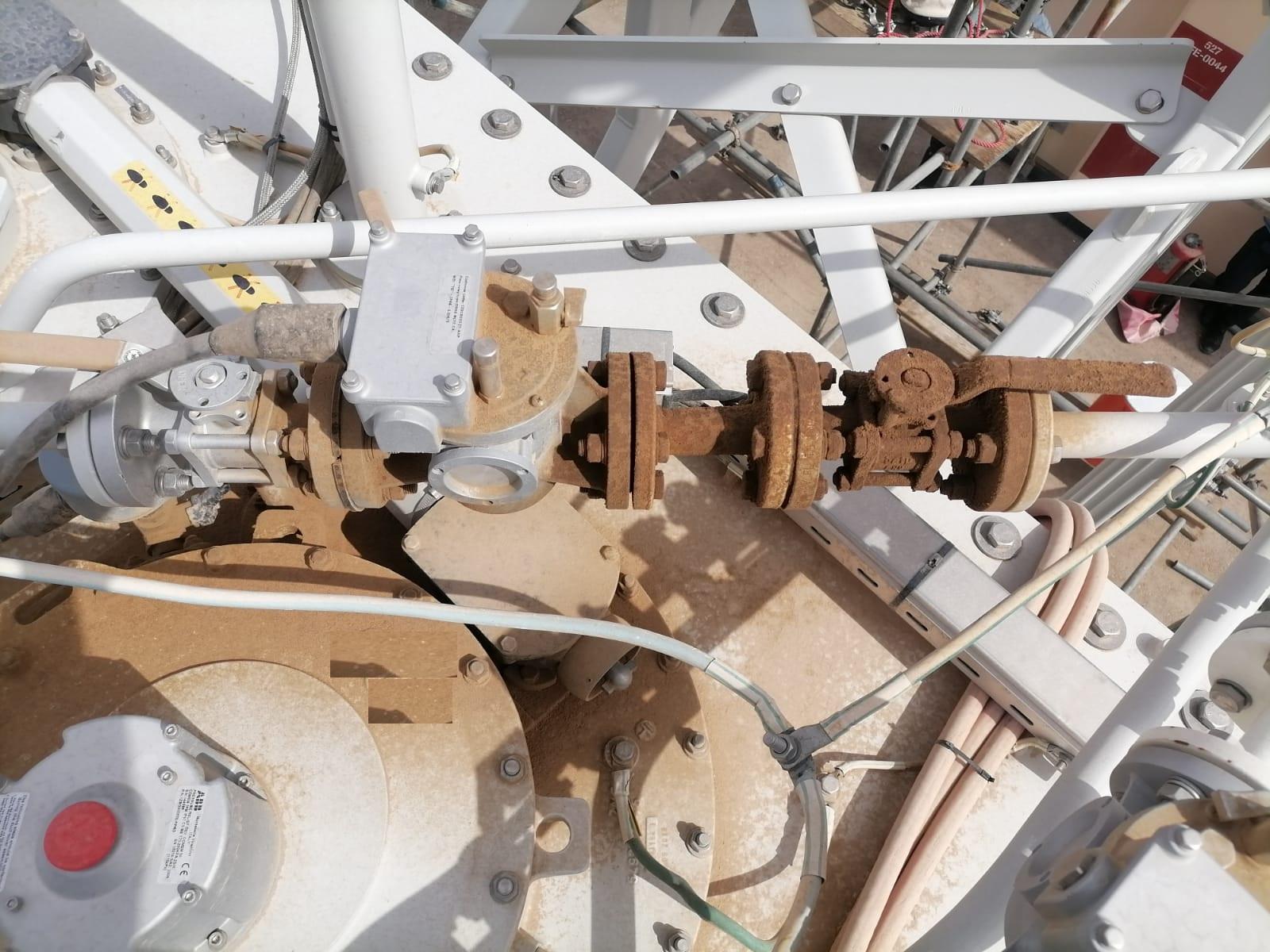
With radiator headers, PRD turrets, Buchholz pipe flanges and main valve bonnets exposed in daylight, the root cause of the plant’s chronic leaks was unmistakable: coastal salt moisture trapped outside the old flat gaskets had eaten deep rust pits across several mating steel flange rings, while original elastomer seals had baked brittle and rectangular.
Simply bolting new gaskets onto corroded steel would have failed within months. Where flange faces had minor surface oxidation, technicians dressed and lapped the sealing lands back to uniform metallic flatness using precision stones and non-shedding rotary conditioning discs while vacuum-shrouding ports so zero grit entered tank nozzles. Where flange rings or auxiliary valve necks were corroded past machining tolerances, OEM-dimensioned replacement flanges and overhauled isolation valves—verified dimensionally under our QA/QC inspection standards—were installed.
Every disturbed joint received certified high-temperature, oil-resistant OEM gaskets rated for continuous Gulf thermal duty, pulled down evenly in three calibrated torque passes (30%, 70%, 100%) following a numbered cross-bolt sequence and striped with tamper-evident torque-seal lacquer.
Bolt metallurgy and thread lubrication received the same engineering attention as the gaskets themselves. In coastal petrochemical yards, mixing unlubricated stainless-steel Grade A4-80 fasteners causes instant thread galling (‘cold welding’) halfway down a radiator flange, tricking a click-type torque wrench into clicking at target Newton-metres while actual clamping force on the gasket is barely half of spec! Conversely, slathering nickel anti-seize onto bolts calibrated for dry K-factors over-compresses elastomers by twenty-five to thirty percent. Standardising clean, brush-lubricated fasteners with matched hardened flat washers and Belleville spring washers ensured identical clamping pressure around every 360-degree bolt circle, while machined compression-limit rings prevented flat gasket extrusion across wide 150 MVA radiator butterfly valves.
Pulling 0.1 mbar deep vacuum, hot-oil transfusion and 24-hour dry-nitrogen proof testing
Once every radiator bank, Buchholz relay, PRD and drain valve was re-assembled and torque-verified, Petrozone did not immediately pump oil back in. First, we blanked non-vacuum-rated accessories (such as thin conservator bladders or specific relief diaphragms per OEM vacuum withstand limits) and connected multi-stage Roots-blower high-vacuum pumping skids directly to the main 150 MVA tank.
Stepping vacuum down gradually while watching calibrated digital Pirani vacuum gauges, we pulled the 150 MVA tank all the way down to 0.1 mbar (< 100 microns Hg) and held deep vacuum continuously—vaporising any trace surface moisture on pressboard barriers and evacuating microscopic air pockets from deep inside paper-wrapped winding conductors. A vacuum drop-rate hold test with the pump isolated confirmed the newly gasketed tank was vacuum-tight before oil ever entered.
Still holding < 1 mbar vacuum across the upper tank space, we began vacuum oil transfusion: drawing the stored 50,000 litres through our heated, multi-stage degassing and micro-filtration plant directly into the transformer bottom fill port at controlled linear rise velocity (preventing static streaming electrification across dry pressboard!). Once submerged past core and bushing shields, closed-loop circulation continued for multiple full-volume passes until inline and laboratory checks confirmed sparkling dielectric Breakdown Voltage (> 70–75 kV) and ultra-low moisture.
Then came the ultimate mechanical leak test: we pressurised the oil-filled transformer system with regulated high-purity dry nitrogen (N2) to design proof pressure and locked in a continuous 24-hour positive-pressure hold. Every single radiator flange, valve gland, PRD base and Buchholz union was inspected at 4-hour intervals with ultrasonic/soap-film checks alongside ambient-temperature-compensated pressure logging. Result after twenty-four hours: zero pressure decay and not a single drop of oil weep anywhere on the unit.
Before taking off the vacuum manifold and releasing nitrogen pressure back to normal conservator hydrostatic head, technicians followed a strict top-down air-bleeding checklist across every elevated pocket on the 150 MVA tank: HV and MV bushing turrets, Buchholz relay top petcock, OLTC pipe risers, individual radiator bank upper bleed plugs and cooler headers. Skipping a single trapped gas pocket in a Buchholz pipe or turret horn is one of the fastest ways to suffer either a nuisance gas-accumulation trip during startup or partial discharge across an un-wetted bushing stress shield.
| Execution Phase | Engineering Parameter / Equipment | Verification Benchmark Achieved |
|---|---|---|
| 1. Closed-Loop Oil Drainage | 40,000 L + 15,000 L sealed breather tanks (~50,000 L) | Zero spill, zero air/dust contamination; dry-gas core blanket |
| 2. Mechanical & Flange Overhaul | Crane radiator removal, flange dressing & OEM gaskets | 100% calibrated 3-pass star torque + torque-seal witness marks |
| 3. Deep Vacuum Evacuation | Roots-blower vacuum skid monitored via digital Pirani gauge | 0.1 mbar deep vacuum achieved & vacuum-hold leak rate passed |
| 4. Online Oil Purification & Refill | Multi-stage degassing, 1 µm filtration & bottom vacuum fill | Dielectric BDV > 70 kV (IEC 60156) & ultra-low ppm moisture |
| 5. Positive-Pressure Proof Hold | 24-hour regulated dry Nitrogen (N2) hold test | Zero pressure drop over 24 hours; 100% dry flanges |
| 6. Pre-Energisation Electrical Suite | IR, PI, Tan δ, Winding Resistance, TTR & protection trips | Full pass + mandatory oil settling window before load energisation |
Returning leak-free 150 MVA capacity to the petrochemical grid with full QA documentation
Mechanical tightness is only half the sign-off on a 150 MVA substation asset. Following completion of the 24-hour nitrogen proof test, conservator oil-level calibration and mandatory post-vacuum dielectric settling time, our electrical testing and commissioning engineers executed pre-energisation electrical verification—confirming Insulation Resistance, Polarization Index, Capacitance & Tan Delta, Turns Ratio, Winding Resistance and live trip-circuit checks on every disturbed Buchholz, PRD and temperature protection device, mirroring the discipline we apply on 220 MVA refinery GSU turnarounds.
Downstream 13.8 kV / 33 kV feeder bays—where plants increasingly pair preventive switchgear testing and 24/7 UHF partial discharge monitoring with rapid brownfield switchgear upgrades—were cleared for switching, and the remediated 150 MVA transformers returned smoothly to full petrochemical process load.
Months after return to service through peak Saudi summer temperatures, plinths beneath the radiator banks remain bone-dry, silica-gel breathers stay blue/orange far longer because air ingress has been eliminated, and the client's reliability team holds a complete flange-by-flange torque, vacuum-curve, BDV/DGA and electrical test binder for audit readiness. Post-energisation infrared thermography walkdowns at 24 hours and 7 days under full petrochemical load also confirmed uniform top-to-bottom thermal gradients across every re-hung radiator bank—proving every isolation butterfly valve was locked wide open and circulating freely.
For plant engineering managers weighing spot repairs against full closed-loop remediation, the math on a 150 MVA transformer is decisive: addressing radiator headers, PRDs, relay unions and valves together during one controlled 0.1 mbar vacuum outage costs a fraction of repeated crane call-outs and eliminates the silent cellulose moisture penalty that shortens winding life by decades. Dealing with chronic radiator flange, bushing or valve seepage on a 50 MVA to 300 MVA transformer? Browse more real engineering case studies on our technical blogs page, revisit our sample website overview, or contact Petrozone's Al-Khobar transformer remediation team for a site walkdown and turnkey shutdown proposal.
“Petrozone delivered what they promised — clean execution, minimal downtime, and airtight documentation. Their team worked like clockwork.”
More from our engineers & field teams
Transformer oil leaks: every leak type, why it happens and how to stop it
Common leak points on power transformers, why gaskets and welds fail in Gulf heat, and how to fix them permanently without repeat outages.
Read article →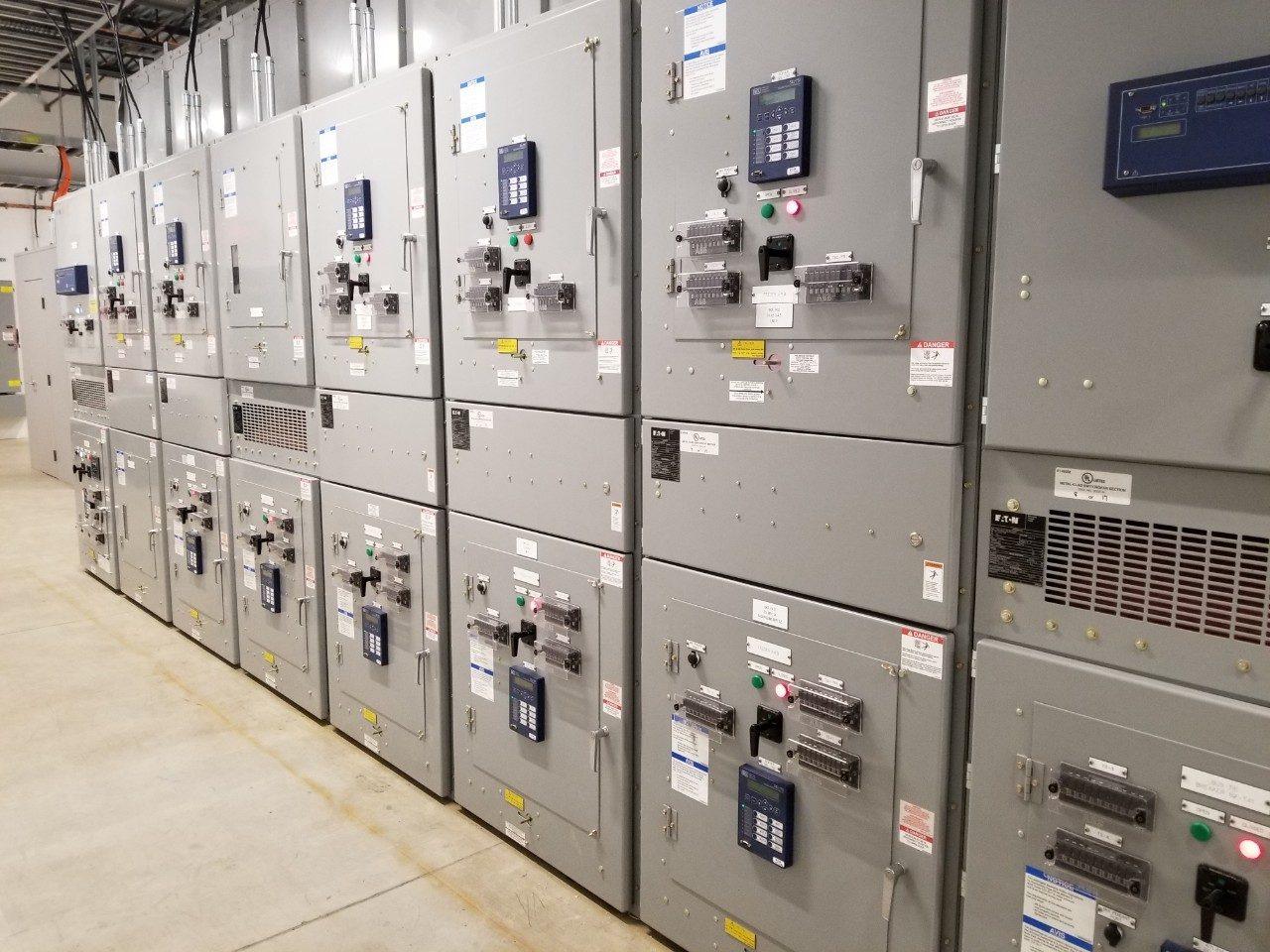
UHF partial discharge monitoring: 24/7 switchgear protection in Saudi Arabia
How continuous UHF sensing detects early insulation defects inside medium- and high-voltage switchgear before failure occurs.
Read article →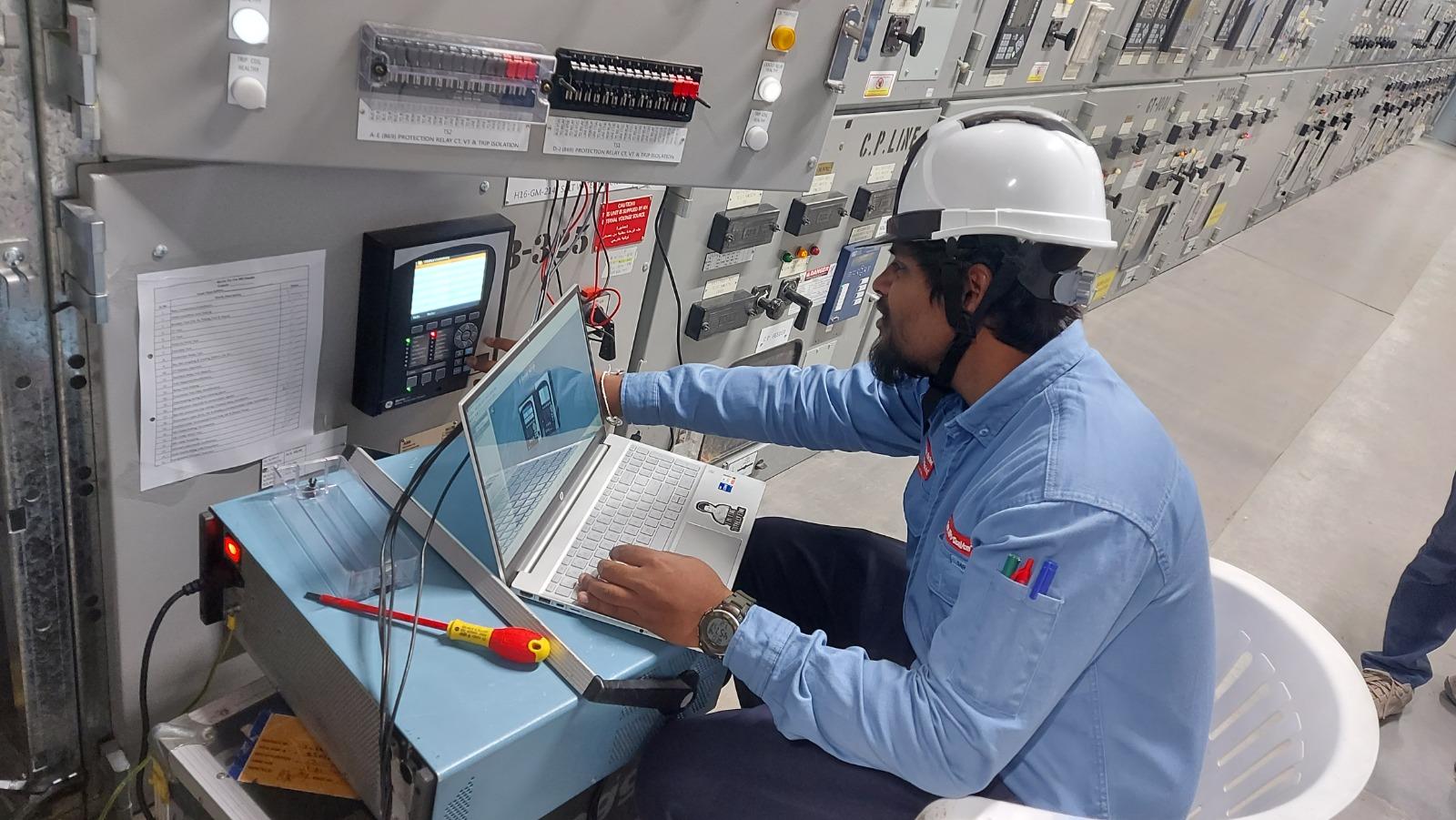
Preventive maintenance of medium-voltage switchgear: field guide
Inspection intervals, diagnostic testing checks and practical maintenance procedures to prevent unplanned substation outages.
Read article →Planning a project? Talk to the right division.
Send us the scope, location and timeline. We will reply with the right team and a quote.