
A 72-hour turnaround for RMU replacement & MV cable termination
How two rotating day-and-night Petrozone crews dismantled thirty-year-old switchgear, modified civil trenches, installed twin Siemens 33 kV Ring Main Units and terminated over thirty medium-voltage cables inside a hard 72-hour Ramadan outage window.
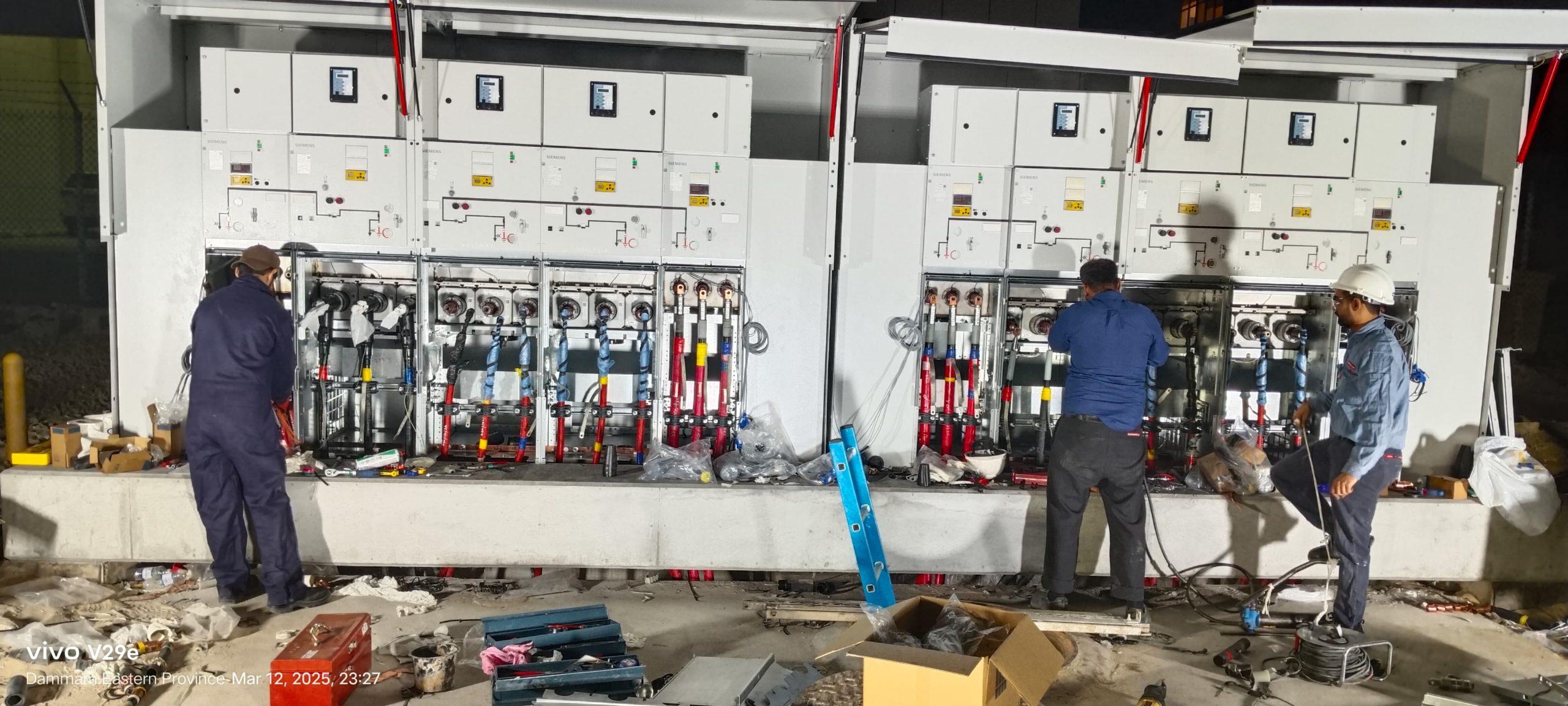
When thirty-year-old Ring Main Units run out of spare parts and margin
Every mature industrial facility in Saudi Arabia eventually faces the same brownfield dilemma: the concrete substation building and underground XLPE cable network still have years of useful life, yet the thirty-year-old Ring Main Units (RMUs) tying the distribution loop together have become a single-point operational hazard. On this facility’s 33 kV distribution ring, decades of coastal heat, load growth and aged elastomer boots had triggered recurring dead-break termination flashovers. Worse, the original switchgear series had long been discontinued—meaning a single mechanical spring-mechanism failure or gas leak threatened weeks of unplanned downtime waiting on custom fabrication.
Replacing two multi-panel 33 kV Ring Main Units on a greenfield construction site normally spans ten to fourteen working days across civil foundation works, crane placement, heavy power-cable pulling, inline splicing, thirty-plus plug-in terminations, protection relay wiring and high-voltage commissioning. This client did not have fourteen days. Downstream continuous operations could tolerate exactly seventy-two hours of total electrical isolation—and the only viable plant window fell right in the middle of Ramadan.
Accepting a 72-hour brownfield replacement contract without airtight pre-outage engineering is a recipe for stranded feeders at Hour 70. Before signing off on the execution schedule, our electrical erection and installation leads, certified MV cable jointers and protection commissioning engineers broke every minute of the 72-hour clock into parallel critical paths—moving almost forty percent of the total engineering and testing workload ahead of Hour Zero.
Choosing the Siemens 8DJH36 platform for the replacement solved two chronic environmental weaknesses of the thirty-year-old lineup at once. Because its primary three-position switch-disconnectors and vacuum circuit-breaker vessels sit inside a robotically laser-welded, hermetically sealed stainless-steel primary tank, coastal humidity, fine shamal sand and corrosive industrial vapours can never reach live 33 kV switching contacts. Combined with Internal Arc Classification (IAC A FLR) directed downward into a controlled relief channel and motorised remote switching readiness for substation automation, the upgrade jumped three generations in operator arc-flash safety inside the exact same substation footprint.
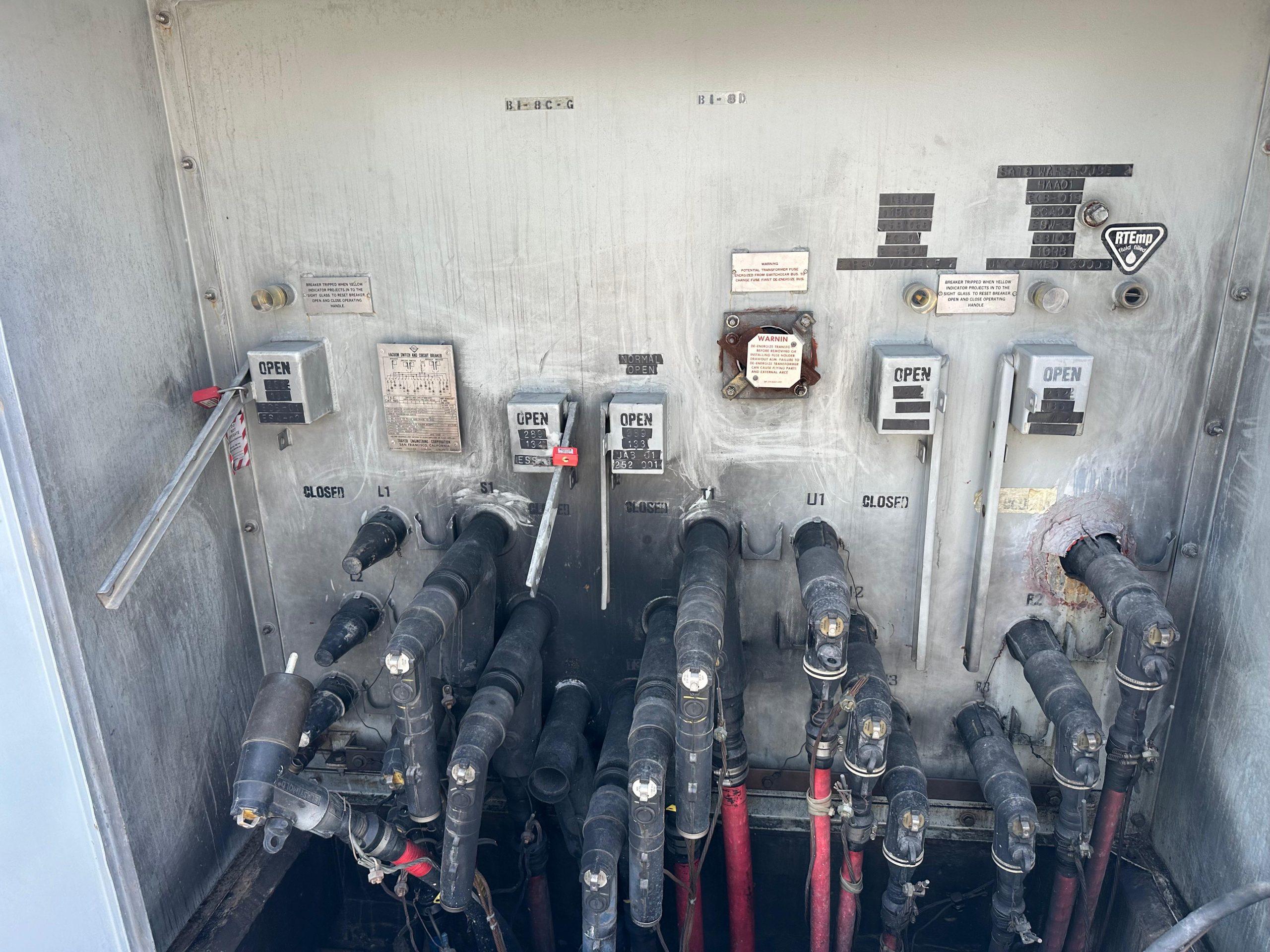
Why pre-testing relays and mapping underground cable geometry saved thirty hours
Brownfield switchgear replacements stall for three predictable reasons: the new panel baseframe doesn’t match the old cable trench steelwork, existing underground XLPE cables come up twenty centimetres too short to reach the new bushing centres, or a defective CT/relay channel is discovered at Hour 64 when everyone is exhausted. Our pre-shutdown phase eliminated all three surprises two weeks before a single isolation breaker was opened.
First, we took both new Siemens 33 kV 8DJH36 hermetically sealed SF6-insulated Ring Main Units through complete off-site factory-style pre-commissioning in a controlled staging area. Every numerical protection relay had its approved coordination settings loaded and verified by secondary injection; every CT ratio, polarity and burden loop was rung out; SF6 gas density interlocks, motorised switch actuators and local/remote control wiring were exercised end-to-end. By the time our project logistics team delivered the panels to the substation apron, the switchgear was known-good before touching the foundation.
Second, our site engineers surveyed every incoming and outgoing feeder cable cross-section—spanning 70 mm² up to heavy 500 mm² single-core and three-core 33 kV copper/aluminium XLPE cables—against the exact C-interface bushing height and phase pitch of the Siemens 8DJH36 bays. Because legacy RMUs had lower bushing standoffs, eighteen existing feeders required precision inline transition joints (18 inline MV splices) and short tail extensions (70–500 mm²) to achieve stress-free bending radii into the new cable compartments without side-loading the cast-resin bushings.
Third, every single cold-shrink / heat-shrink inline joint kit, 30+ screen-separable plug-in T-type termination kits, bimetallic/shear-bolt mechanical lugs, earthing braids, custom galvanized base-channel steelwork and calibrated hydraulic crimping dies were double-inventoried on site with 20% contingency spares—backed by our QA/QC inspection protocols so a dropped stress cone at 2:00 AM would never halt a shift.
Controlled dismantling of 30 legacy terminations and rapid foundation adaptation
At Hour 00:00, plant electrical operations and Petrozone’s senior authorised testing engineer executed full ring isolation, proved dead across every feeder, applied earthing switches and hung multi-hasp LOTO padlocks under consolidated Permit-to-Work control. Immediately, two coordinated workstreams launched simultaneously rather than sequentially.
Inside the bay, Crew A systematically tagged every phase core (R-Y-B / L1-L2-L3), control multicore and earth sheath with heat-stamped stainless-steel markers before unbolting thirty aged dead-break terminations. Preserving existing live-network cable insulation during demolition is delicate work: yanking a stiff thirty-year-old 500 mm² XLPE core sideways with a crowbar cracks aged outer PVC oversheaths or disturbs water-blocking tape below trench floor level. Each disconnected tail was capped against humidity and secured clear of rigging paths.
As soon as our certified rigging crew crane-lifted the obsolete RMU housings clear of the trench, civil modification specialists stepped in to reshape the concrete trench lip, anchor heavy levelled steel support channels with fast-curing high-strength non-shrink structural epoxy grout, and seal cable-entry duct transitions. By Hour 18, both new Siemens 8DJH36 33 kV lineups were crane-set onto their modified plinths, laser-levelled within 1 mm/m tolerance so mechanical switch shafts experienced zero frame twist, bolted down and bonded to the main substation copper earth grid.
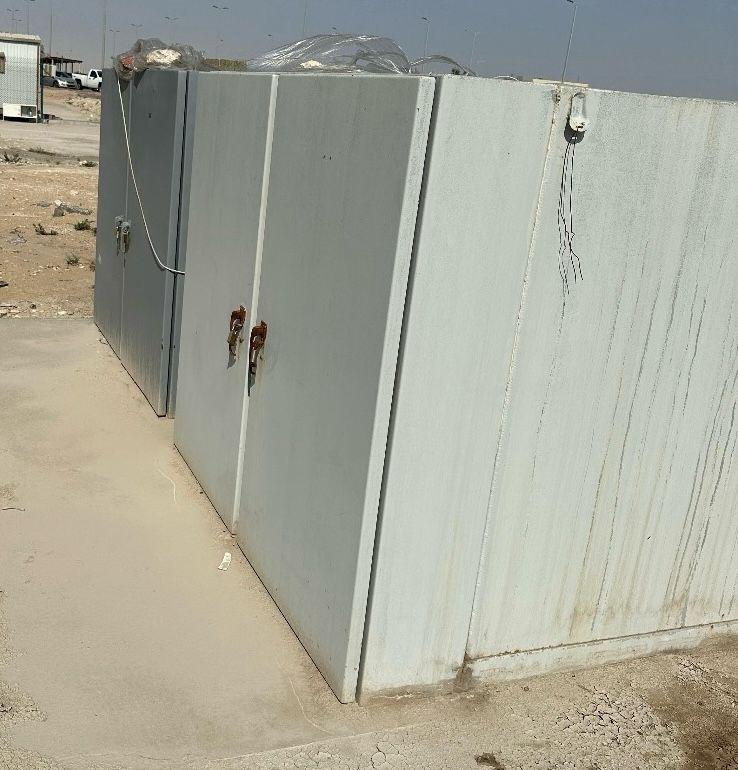
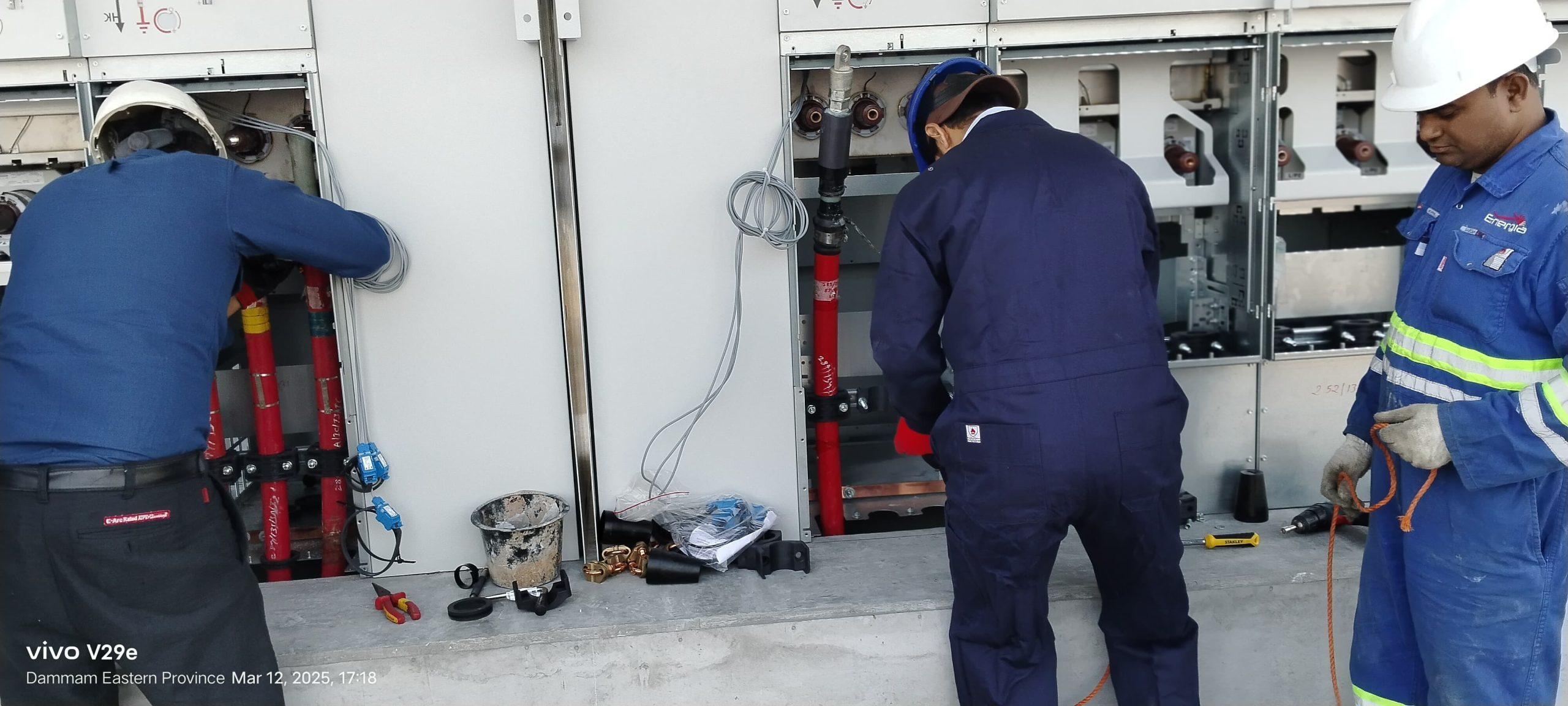
Executing 18 inline joints and 30+ screen-separable T-terminations without a single defect
If you want to know why 33 kV cables fail six months after a rushed shutdown, watch how the semi-conductive insulation screen is stripped. At 33 kV (19/33 kV), electric field stress at the exact millimetre where the black extruded semi-conducting screen ends over natural translucent XLPE insulation is unforgiving. A radial scoring blade set half a millimetre too deep leaves a microscopic ring cut in the XLPE; conductive silicone grease smeared carelessly from dirty gloves transfers carbon flecks right across the primary creepage path.
Our certified 33 kV medium-voltage cable jointers treated the trench and cubicle apron like a cleanroom despite the tight clock. Across sequential day and night shifts, Crew B routed new 70 mm² to 500 mm² feeder tails, completed 18 inline 33 kV transition splices in the trench gallery, and built more than 30 outer-cone screen-separable T-type plug-in terminations onto the Siemens 8DJH36 bushings.
Every single phase followed a four-checkpoint QA hold witnessed by the shift engineer before closing the boot: (1) vernier verification of outer-sheath, copper-tape/wire screen and semi-con stripback dimensions to ±1 mm of the termination manufacturer’s drawing; (2) progressive aluminium-oxide sanding (120 to 400 grit—never conductive emery cloth!) and longitudinal polishing of the XLPE core until glass-smooth, wiped in one direction only toward the semi-con step with lint-free solvent pads; (3) calibrated shear-bolt / hexagonal lug compression free of sharp burrs; and (4) void-free assembly of the geometric stress-control adapter, T-body housing, rear insulating plug and separate screen-earthing tail routed cleanly through the zero-sequence core-balance earth-fault CTs (making sure the cable earth braid passed *back* through the CBCT window where required so earth-fault relays wouldn’t mis-operate!).
| Turnaround Window | Primary Critical-Path Activity | Engineering & QA Verification Gate |
|---|---|---|
| Pre-Outage (T − 14 Days) | Off-site relay secondary injection, cable trench survey & kit kitting | 100% Siemens 8DJH36 IED curves, SF6 density & CT/VT loops pre-certified |
| Hours 00 – 18 | Ring LOTO, 30 legacy boots dismantled, crane removal, plinth grouting & new RMU placement | Laser frame level (< 1 mm/m), main earth-grid micro-ohm bond & torque sign-off |
| Hours 18 – 56 | Routing 70–500 mm² XLPE tails, 18 inline 33 kV splices & 30+ plug-in T-terminations | Per-phase semi-con step inspection, CBCT earth-braid routing check & torque mark |
| Hours 56 – 68 | Insulation resistance, VLF / HV sheath & dielectric withstand, phase-out & live trip tests | Zero-defect dielectric pass, SCADA telemetry handshake & 86 trip prove-out |
| Hours 68 – 72 | PTW clearance, progressive ring energisation, phasing check & load restoration | Clean 33 kV ring closed on schedule with zero alarms and full client handover |
Managing back-feed hazards and confined-trench safety across 24-hour shifts
Working on a radial single-ended motor feeder is straightforward; isolating a multi-node 33 kV distribution ring is unforgiving because energy can arrive from both ends of the loop, from downstream step-down standby generators, or from induced parallel-trench capacitive coupling. Before any cable identification cutter or hydraulic crimper touched an existing 33 kV core, Petrozone’s authorised switching engineers verified physical open points and locked earthing switches at both remote upstream boundary substations—cross-checking cable route numbers against positive low-frequency cable-identification tone injection and spiked safety verification procedures.
Down inside deep concrete cable trenches, industrial safety goes beyond electrical LOTO. Older substation trenches across Saudi industrial estates can accumulate heavier-than-air hydrocarbon vapours, methane or hydrogen sulphide (H2S) migrating through unsealed duct banks, while heat-shrink torch work or solvent degreasing in tight quarters demands continuous four-gas atmospheric monitoring (O2, LEL, CO, H2S) and forced fresh-air ventilation.
Throughout all seventy-two hours, a dedicated full-time Petrozone HSE supervisor audited permit boundaries, enforced arc-rated FR PPE and insulated tool inspections at every 12-hour Ramadan shift change, maintained clear crane swing exclusion zones during panel lifting, and verified hydration and rest rotations after Iftar and Suhoor so precision never slipped under clock pressure.
Proving every splice and relay before closing onto the 33 kV ring—with four hours to spare
By Hour 56, mechanical and cabling crews cleared the bay so our testing and commissioning team had twelve unhurried hours—never compress final high-voltage testing to make up lost construction time! Each spliced and terminated 33 kV feeder underwent DC outer-sheath integrity testing, 5 kV Insulation Resistance and Polarization Index verification, Very Low Frequency (VLF 0.1 Hz sinusoidal) withstand testing per IEEE 400.2 / IEC 60502-2 so aged XLPE insulation was proven without destructive DC space-charge damage, and primary-to-secondary phase continuity checks.
Simultaneously, protection engineers verified live trip commands from every overcurrent and earth-fault element onto the 8DJH36 circuit breakers, confirmed SF6 gas-pressure healthy signals and remote open/close telemetry back to the central control room, and verified phase rotation across open ring points before parallel closure.
At Hour 68—four hours inside the hard 72-hour deadline—all permits were signed off, earthing switches were opened in sequence, and both 33 kV Ring Main Units were energised cleanly on the first switching sequence with zero trips, zero partial discharge anomalies and zero safety incidents across day and night Ramadan shifts.
For maintenance and project managers planning similar brownfield upgrades—whether replacing distribution RMUs, scheduling preventive switchgear overhauls, adding online UHF partial discharge sensors to newly landed T-cones, or coordinating substation shutdowns alongside 220 MVA transformer turnarounds and 150 MVA transformer remediation—three practical lessons stand out from this job: pre-commission every relay off-site before outage day, survey underground cable slack early enough to engineer proper transition splices rather than stretching old XLPE cores, and staff separate day/night jointer crews so precision craftsmanship holds steady at 3:00 AM.
Have an obsolete RMU or medium-voltage switchboard facing a tight plant turnaround window? Read more real execution reports on our engineering blogs page or send your single-line diagram and outage schedule to Petrozone’s electrical division in Al-Khobar.
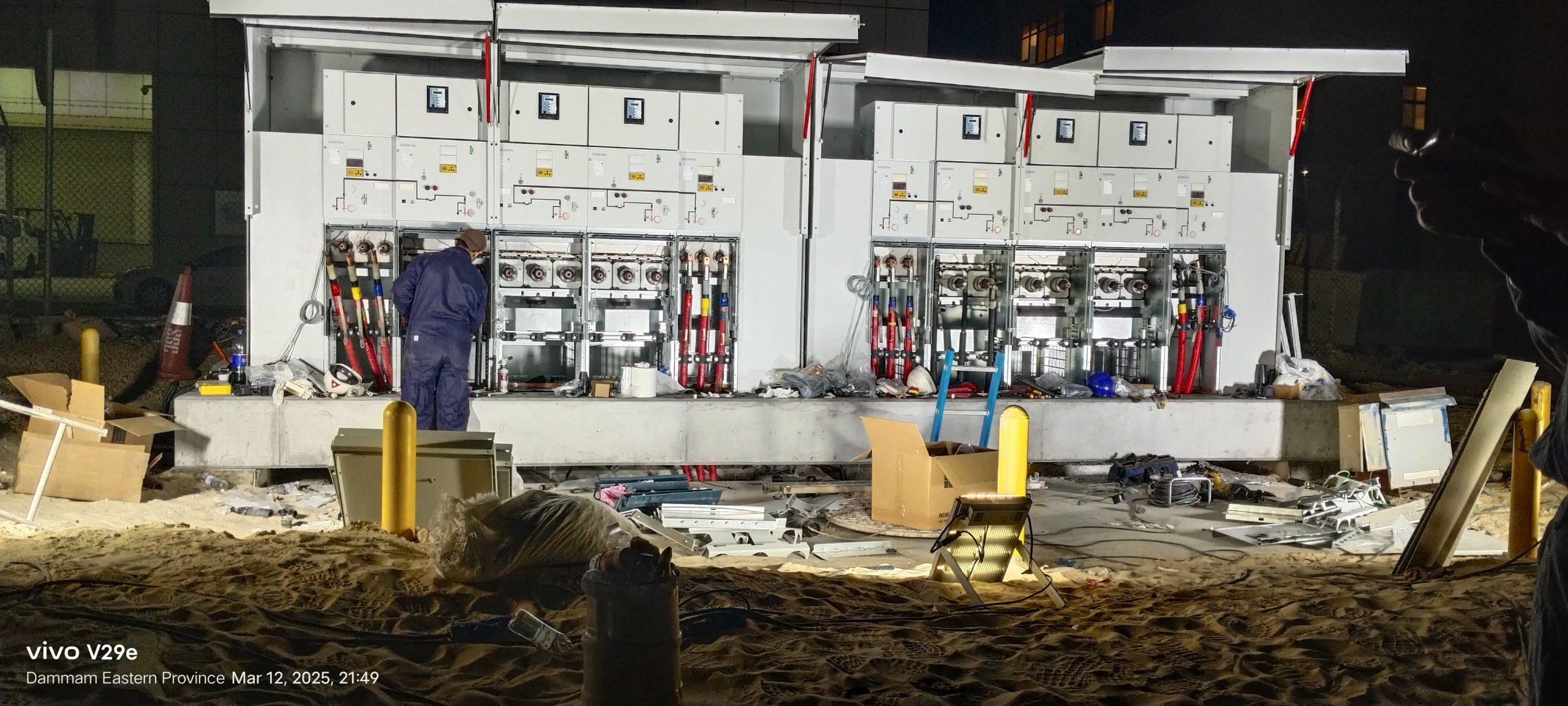
“Petrozone’s ability to execute such a complex shutdown project in just 72 hours was truly impressive. The team worked tirelessly, and their commitment to quality and safety was evident in every step. We couldn’t have asked for a better execution.”
More from our engineers & field teams

Critical 220 MVA GSU transformer maintenance for leading Saudi refinery
High-precision turnaround maintenance, insulating oil treatment and diagnostic verification executed on schedule at a major refinery in Saudi Arabia.
Read article →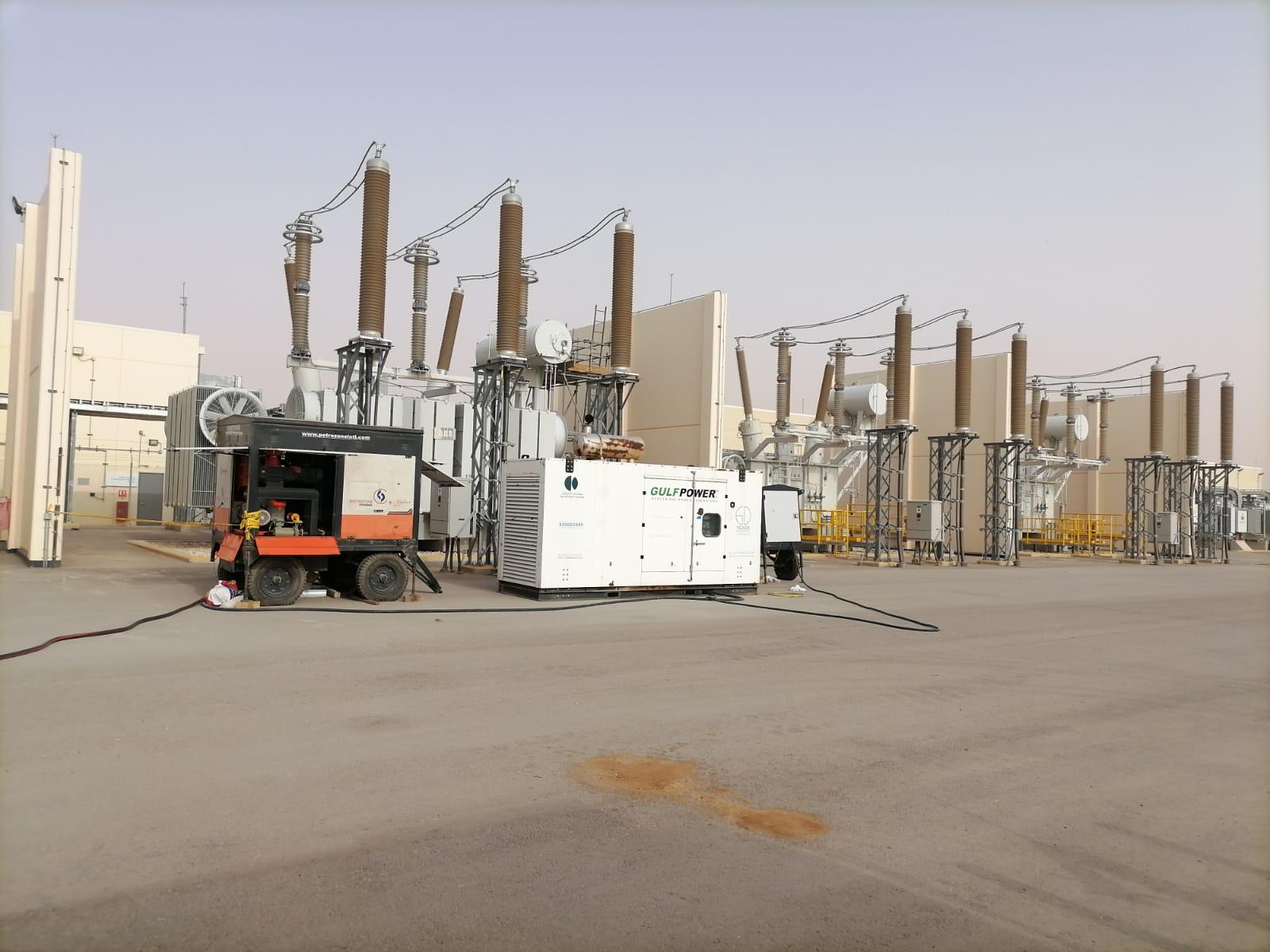
Repairing oil leaks on 150 MVA power transformers at a Saudi petrochemical plant
Full-scope leak remediation across radiator flanges, pressure relief devices and valve connections to restore reliability on critical high-voltage units.
Read article →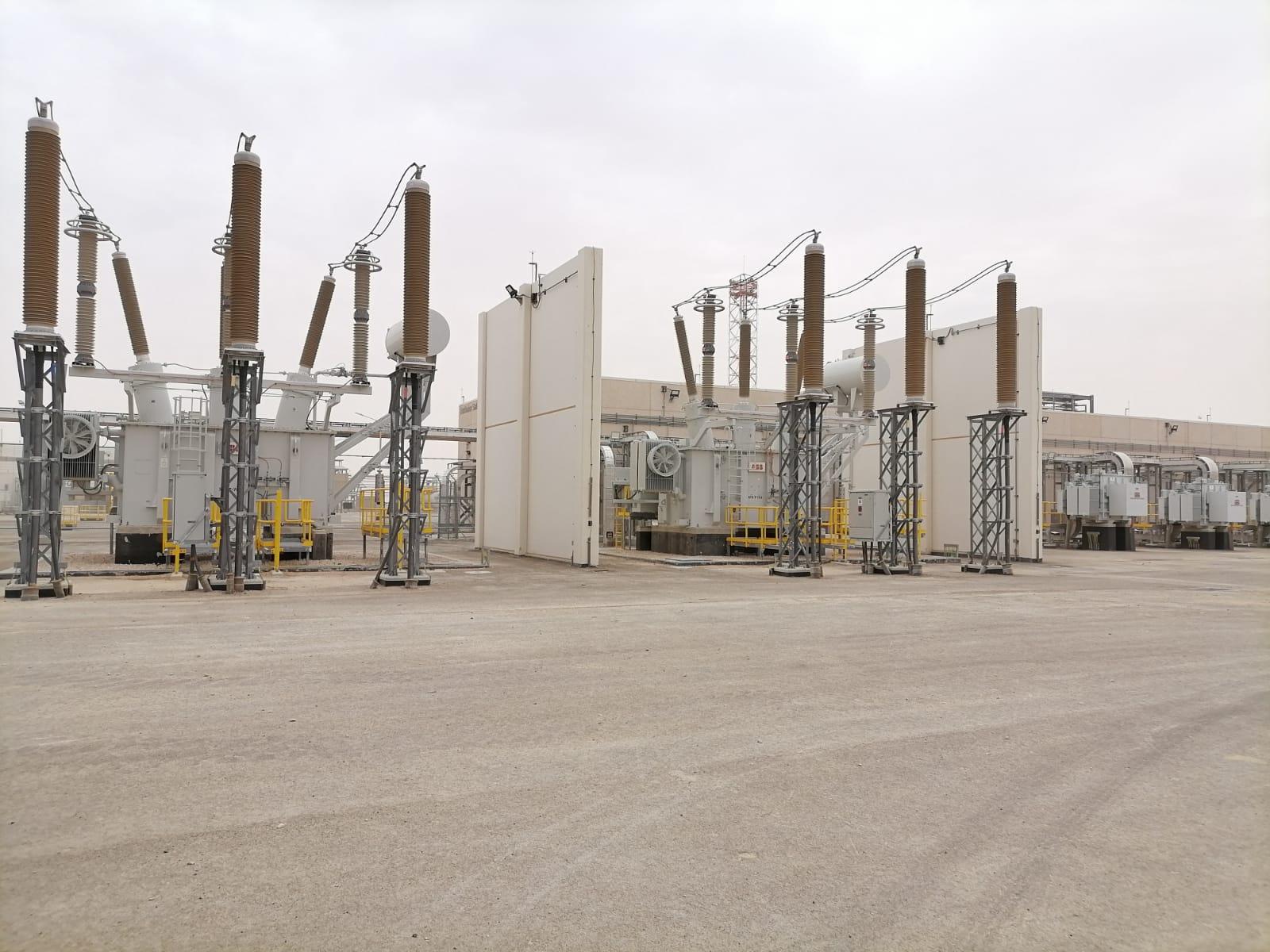
Transformer oil leaks: every leak type, why it happens and how to stop it
Common leak points on power transformers, why gaskets and welds fail in Gulf heat, and how to fix them permanently without repeat outages.
Read article →Planning a project? Talk to the right division.
Send us the scope, location and timeline. We will reply with the right team and a quote.